






Damp problems often begin gradually and many homeowners do not realise there is an issue until visible damage starts to appear. Across Yorkshire areas such as Sheffield, Barnsley, Rotherham, Huddersfield and Doncaster, damp can affect homes of all ages. Older properties are particularly vulnerable due to traditional building materials, but even modern homes can experience damp if ventilation or drainage problems develop.
Quick Answer: The most common warning signs of damp include mould growth, musty smells, peeling wallpaper, damp patches on walls, salt deposits, tide marks near the base of walls and cold surfaces. If you notice any of these issues, arranging a professional damp survey is the best way to identify the cause and prevent the problem from getting worse.
What We Cover
- The most common warning signs of damp
- The different types of damp found in homes
- What causes damp problems in Yorkshire properties
- When to arrange a professional damp survey
Common Warning Signs of Damp
Damp can present itself in a number of different ways depending on the underlying cause. Some signs appear gradually, while others become obvious very quickly. Recognising the early symptoms can help prevent more serious structural damage later.
1. Musty or Damp Smells
A persistent musty smell is often the first indicator that excess moisture is present within a property. This smell is usually caused by damp materials such as plaster, timber or fabrics retaining moisture over long periods of time.
Homeowners sometimes notice the smell before they see visible damage, particularly in rooms with limited airflow or behind furniture placed against external walls.
2. Black Mould Growth
Black mould is one of the most recognisable signs of damp. It often appears in corners of rooms, around window frames and on ceilings. Mould growth is usually associated with condensation problems caused by high humidity and poor ventilation.
In these situations, professional condensation control can help reduce moisture levels and prevent mould returning.
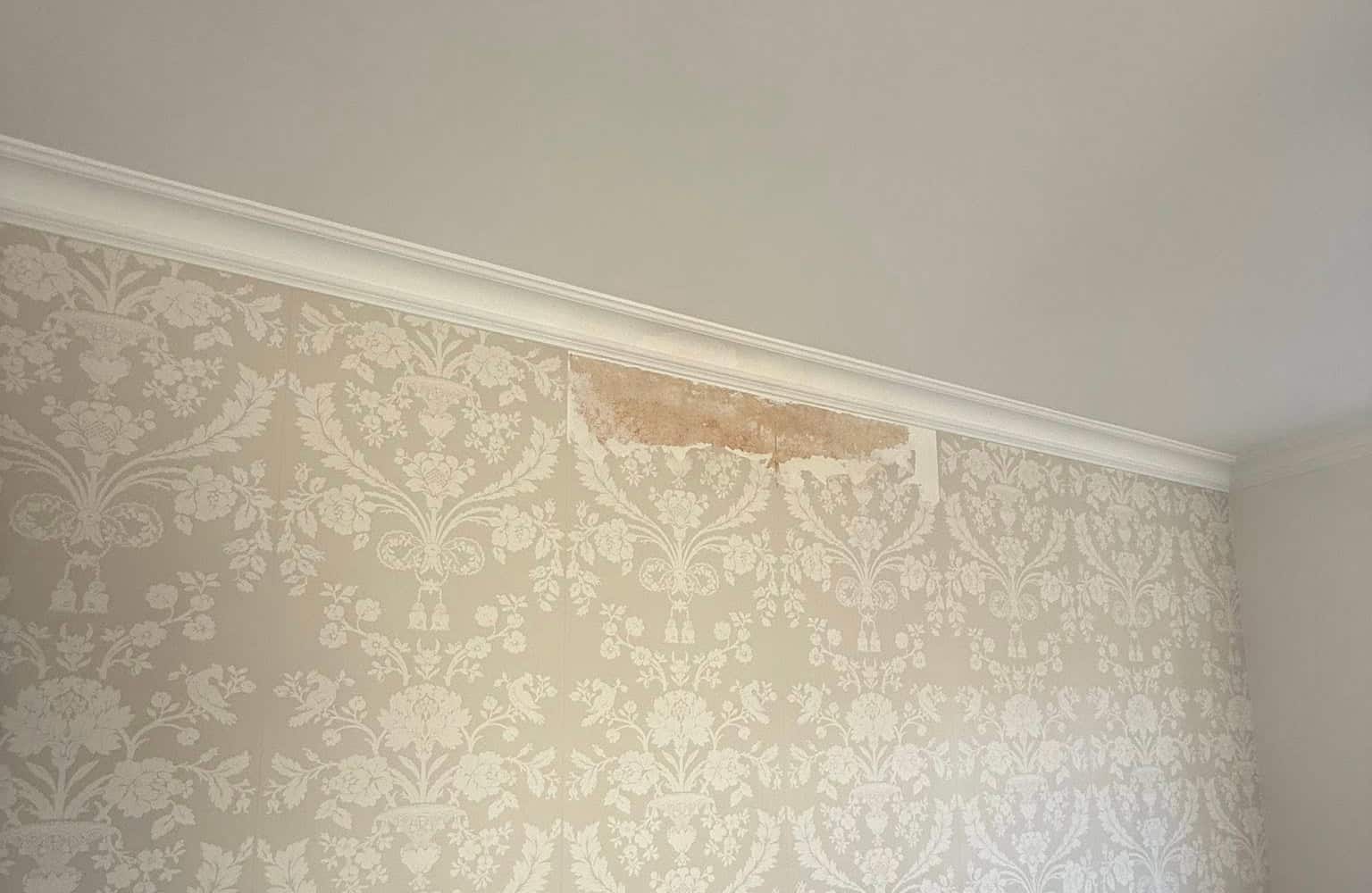
3. Peeling Paint or Wallpaper
Moisture trapped within walls can cause decorative finishes to deteriorate. Paint may bubble or blister, while wallpaper can begin to peel away from the wall surface.
This is often seen in areas where damp patches form repeatedly.
4. Damp Patches on Walls
Damp patches can appear darker than surrounding plaster and often become more visible after rainfall. These patches may indicate penetrating damp caused by defects in the building exterior such as damaged gutters, cracks in render or defective pointing.
A professional damp survey can determine whether the problem is penetrating damp, condensation or rising damp.
5. Tide Marks on Walls
Tide marks appear as horizontal stains along the lower portion of walls. These marks are typically associated with rising damp and occur when groundwater travels upward through masonry via capillary action.
Over time, moisture evaporates from the wall surface but leaves behind salts that create the distinctive staining pattern.
In these situations specialist damp proofing treatment may be required.
6. Salt Deposits on Plaster
White powdery deposits sometimes appear on damp walls. These are salts drawn through masonry by moisture.
Salt contamination can damage plaster finishes and may require specialist treatment after damp proofing work has been carried out.
7. Cold Walls and Surfaces
Damp materials lose insulation performance. This often results in walls feeling noticeably colder than surrounding surfaces.
Cold walls can also contribute to condensation problems because warm air inside the home condenses when it touches colder surfaces.
8. Rotting Timber
Timber structures exposed to persistent moisture can develop fungal decay. This may lead to structural issues if not treated promptly.
Professional wet rot and dry rot treatment may be required to repair affected timber and prevent further damage.
9. Condensation on Windows
Condensation forming on windows during colder months is a common sign that humidity levels inside the home are too high.
While occasional condensation is normal, excessive moisture can eventually lead to mould growth and damp problems.
10. Damaged Skirting Boards
Skirting boards that swell, crack or deteriorate may indicate rising damp affecting the lower portion of walls.
Because skirting boards sit close to floor level, they are often one of the first areas to show visible signs of moisture.
Different Types of Damp in Homes
Understanding the different types of damp can help homeowners recognise potential problems early.
Condensation
Condensation occurs when warm air carrying moisture meets colder surfaces such as windows or external walls. This type of damp is common in bathrooms, kitchens and bedrooms.
Professional condensation surveys can identify ventilation issues and recommend appropriate solutions.
Penetrating Damp
Penetrating damp occurs when water enters the building through external defects such as cracked render, damaged roof tiles or leaking gutters.
This type of damp often appears as irregular patches on internal walls.
Rising Damp
Rising damp occurs when moisture travels upward from the ground through masonry walls. It typically affects the lower section of walls and may cause tide marks and salt deposits.
Where the damp proof course has failed or is missing, specialist damp proofing treatments may be required.
Why Damp Problems Occur in Yorkshire Homes
Properties across Barnsley, Sheffield, Rotherham, Huddersfield and Doncaster can experience damp problems for several reasons.
Many homes in these areas were built before modern damp proofing systems became standard, meaning they may be more susceptible to moisture issues.
Common causes include:
- Poor ventilation
- Blocked air bricks
- Damaged gutters or roof coverings
- External wall defects
- High indoor humidity
- Missing or damaged damp proof courses
Because the causes of damp vary significantly, accurate diagnosis is essential before any treatment is carried out.
When to Arrange a Professional Damp Survey
If you notice any of the warning signs discussed above, arranging a professional damp survey is the best way to determine the underlying cause.
A qualified surveyor will inspect both internal and external elements of the property, identify moisture patterns and recommend appropriate solutions.
The team at All Dry Damp Proofing provides expert damp surveys and treatment services across Barnsley, Sheffield, Rotherham, Huddersfield and Doncaster.
Need Advice About Damp?
If you suspect damp in your home, early investigation can prevent costly structural damage later. Contact All Dry Damp Proofing today to arrange a professional survey and receive expert advice on protecting your property from moisture problems.