




Overview
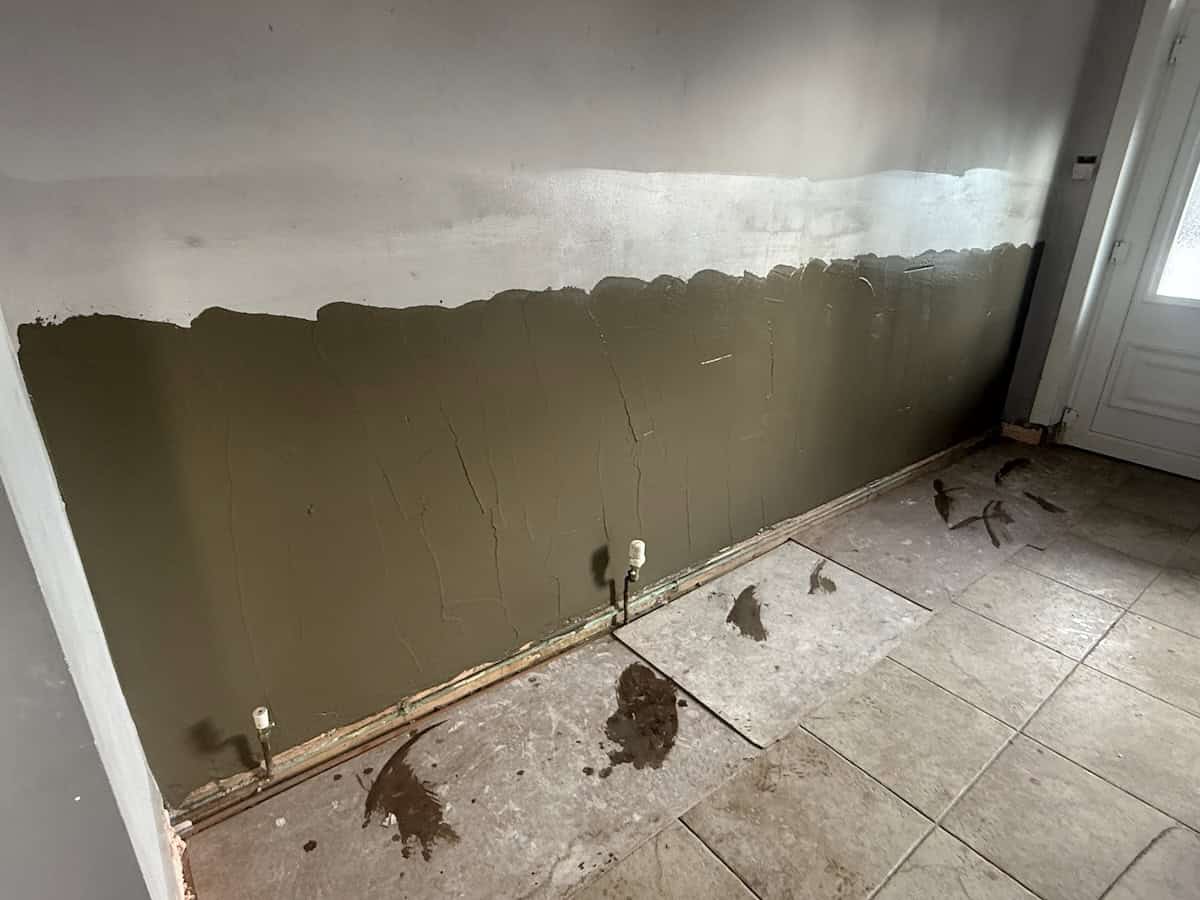
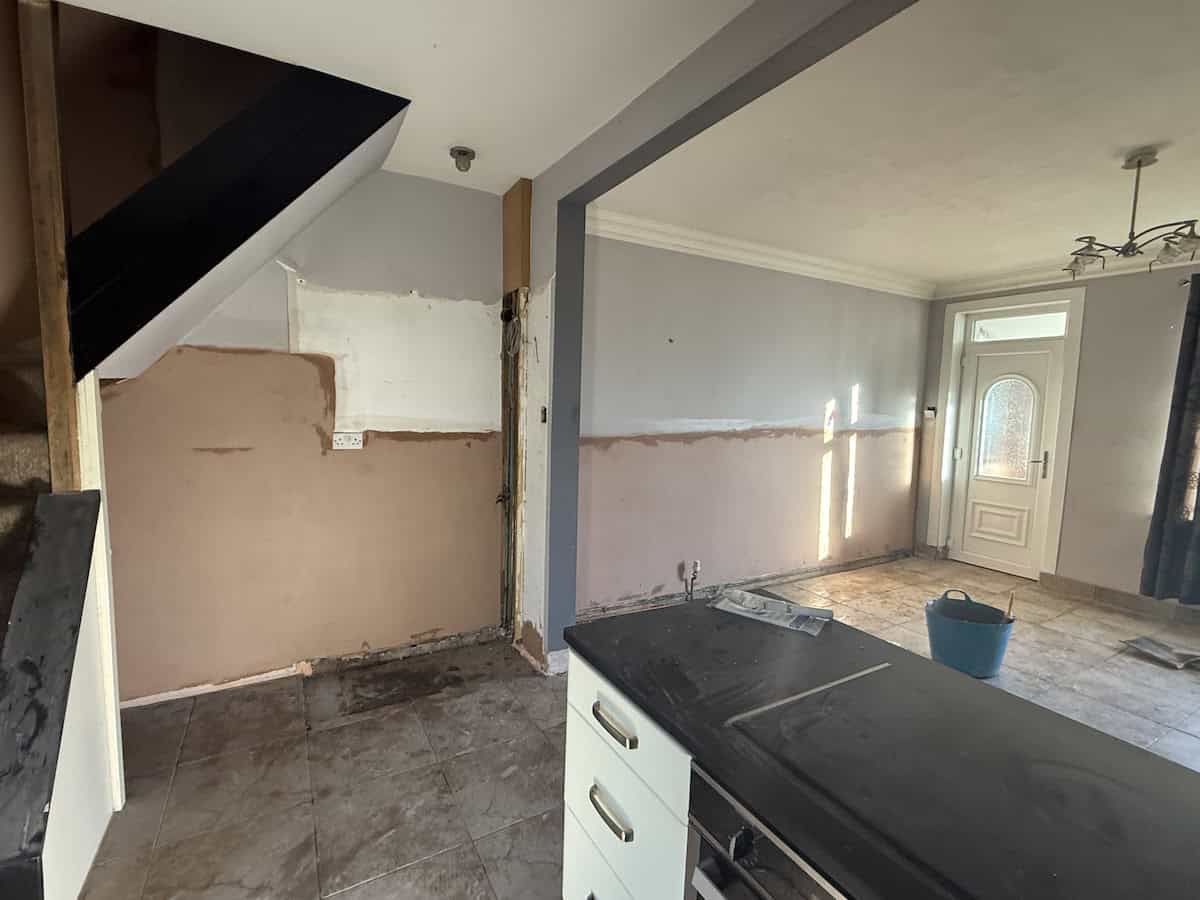
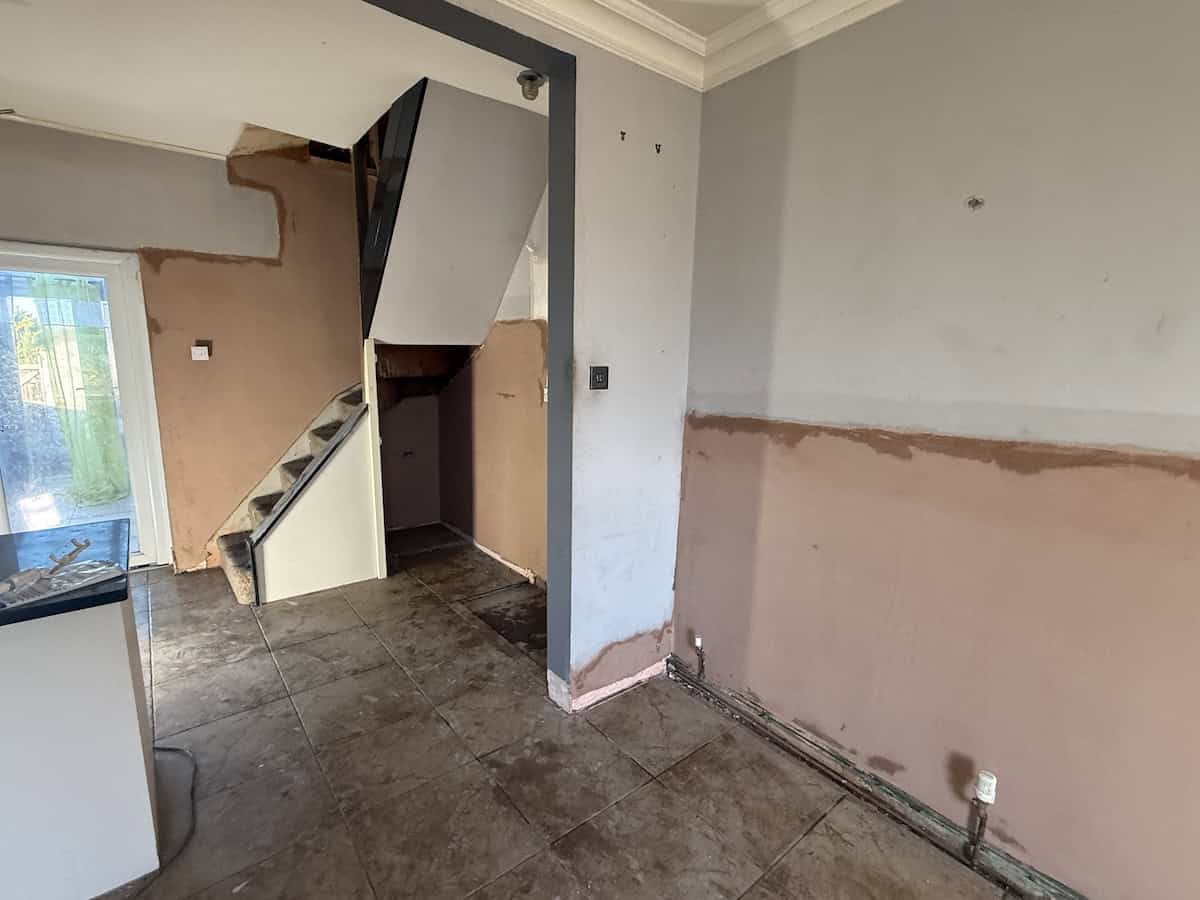
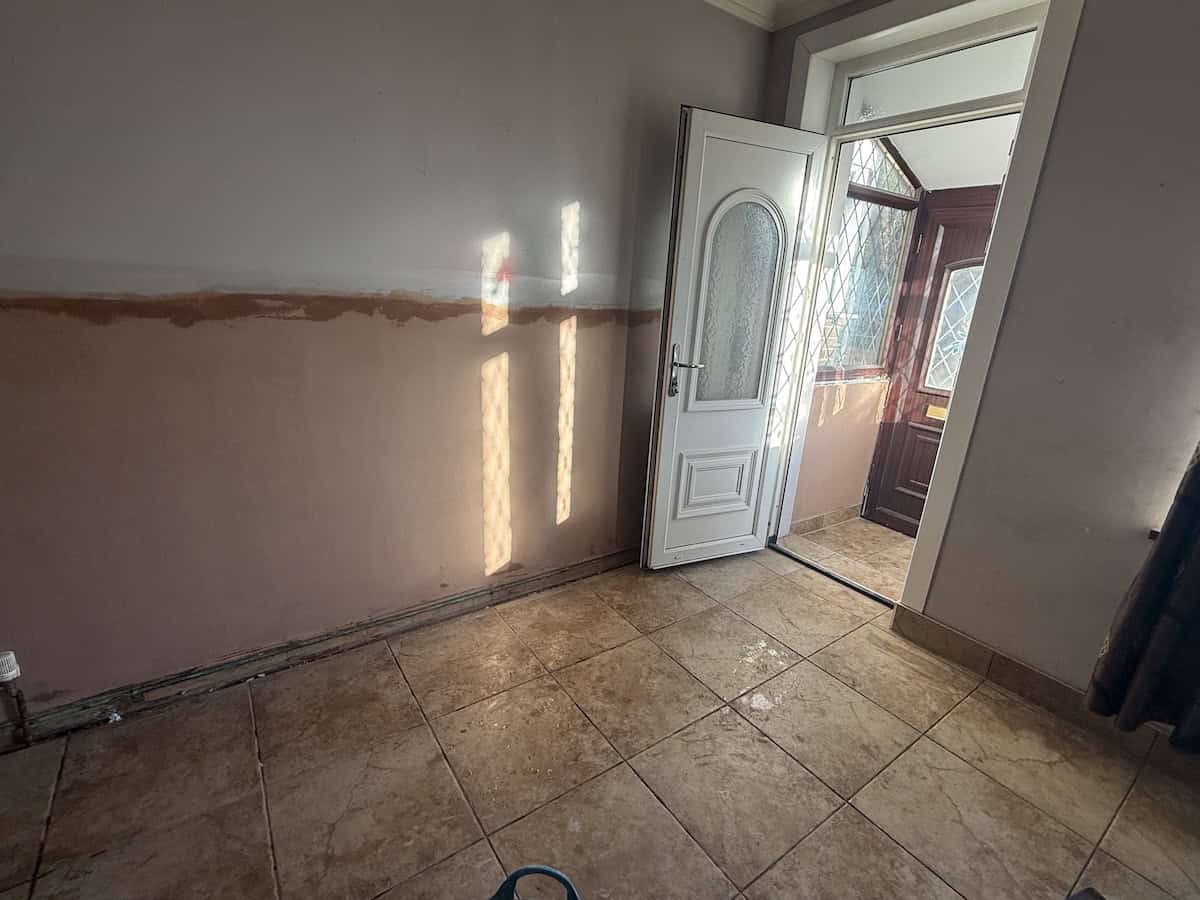
This project took place at a property on Burton Bank in Barnsley, situated on a steep hill with the neighbouring home built around five courses of brickwork higher. The height difference and solid floors in the adjoining property meant moisture was putting pressure on the affected wall. Although a sand and cement render had already been applied, damp patches continued to appear through the plaster.
The Problem
During our inspection, the render itself was sound, but the ongoing damp patches suggested that the previous installer had used a basic damp proof system rather than a fully waterproof solution. When moisture interacts with contaminated plaster, these patches can show through even when the underlying render appears intact. Without proper isolation, the issue would continue to worsen.
Our Solution
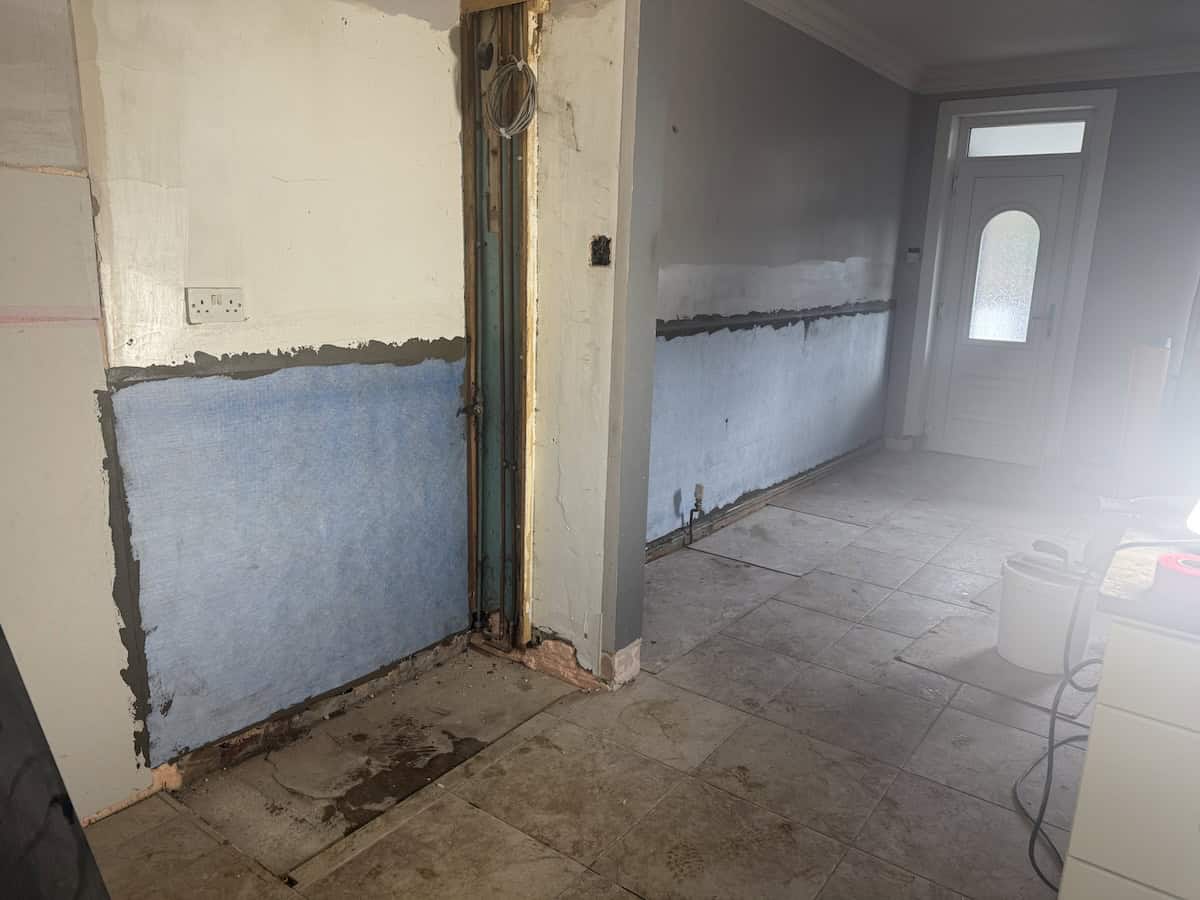
We installed the Dryflex waterproof isolating system, which is designed to stop moisture and salts from migrating into the finished plaster surface. After preparing the background, we applied a bonding key, followed by the Dryflex waterproof adhesive and isolating membrane. Once the system was secure, we skimmed the wall to create an even, clean finish.
This method is ideal for isolating sulphate salts on chimney breasts and other affected walls, provided the existing plaster is sound. In this case, it gave the property the full waterproof protection the original system lacked.
The Result
The Dryflex system successfully isolated the damp patches, leaving the wall dry, stable and ready for decoration after curing. By upgrading the system from simple damp proofing to full waterproof isolation, the homeowner now benefits from long-term protection against moisture and visible staining.
Need Help with a Similar Issue?
If you’re dealing with damp patches, salt contamination or suspected failures in a previous damp treatment, we can help. Visit our Damp Proofing page or get in touch to arrange a professional assessment.