




Bridged DPC and Low-Level Damp on Cleveden Way, Royston
One wall in a rear extension, peeling wallpaper and high moisture readings. It looked like rising damp. Opening the wall up showed the real cause: debris bridging an existing damp proof course.
Not every damp proofing job is massive. Plenty of homes only have one wall that is a problem: clear symptoms, a limited area, and a specification that still needs doing properly.
That is what we found on Cleveden Way in Royston. The right hand side wall of a rear extension, which was the original house wall before the extension was built, was showing peeling wallpaper and elevated moisture at low level. The real issue was not classic rising damp. The existing DPC had been bridged, so moisture from the floor could track straight past it and up into the wall.
It also shows why small jobs can be the awkward ones for a proper PCA contractor to price, and why the cheapest quote from a plasterer who does a bit of damp is not always the safer choice.
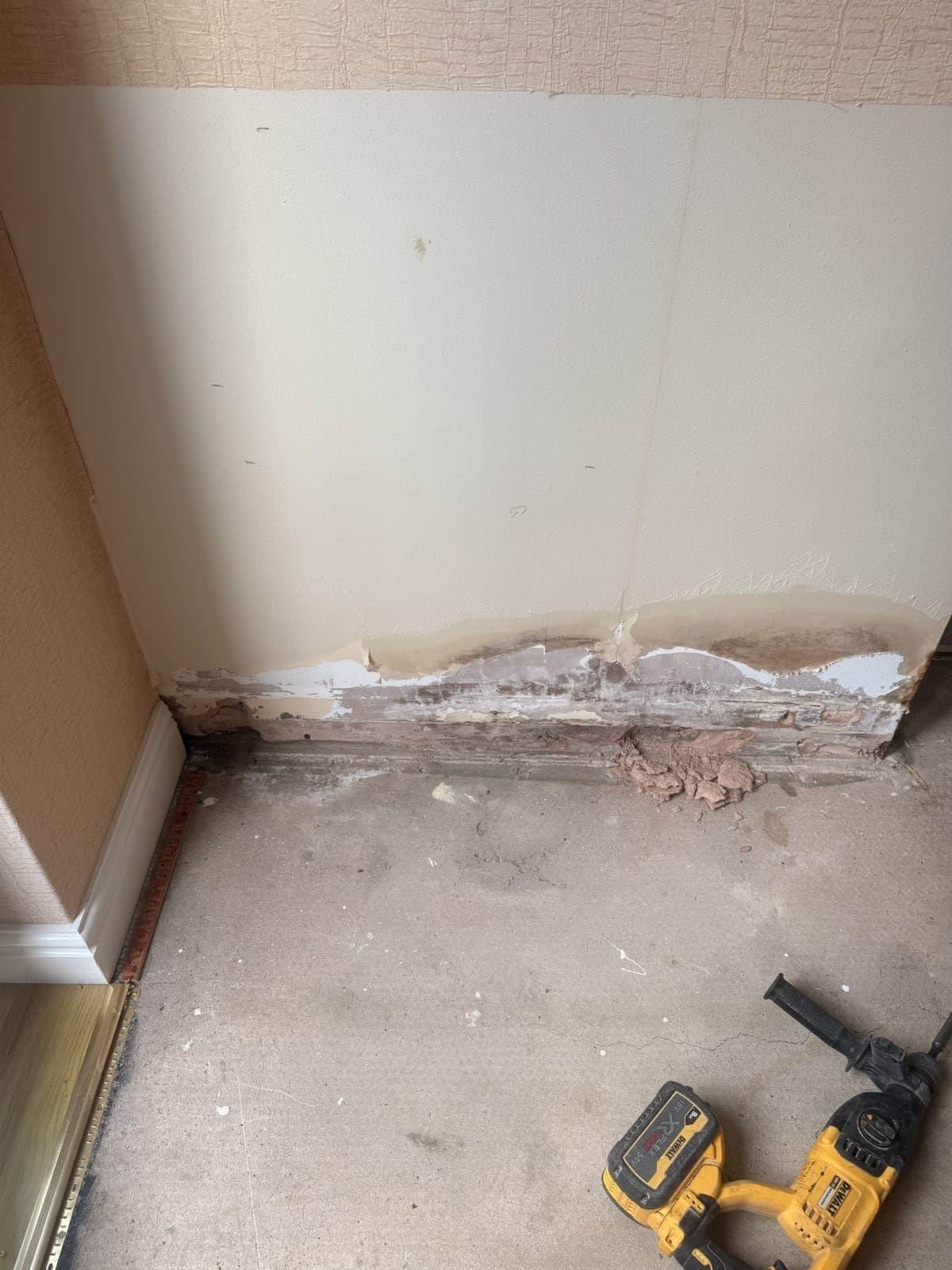
One wall, one clear pattern
A limited scope survey on 5 August 2026 by Simon Cooper CSRT CSSW of Damp & Timber Surveys looked at the extension wall only. The wallpaper had peeled above the skirting line, the damp was highest in the middle of the wall and tapered off towards each side, and the plaster ran continuously down to the solid floor.
Moisture readings were high on the affected face and acceptable on the other side of the same wall. A pattern that localised is exactly the kind that needs opening up rather than guessing at.
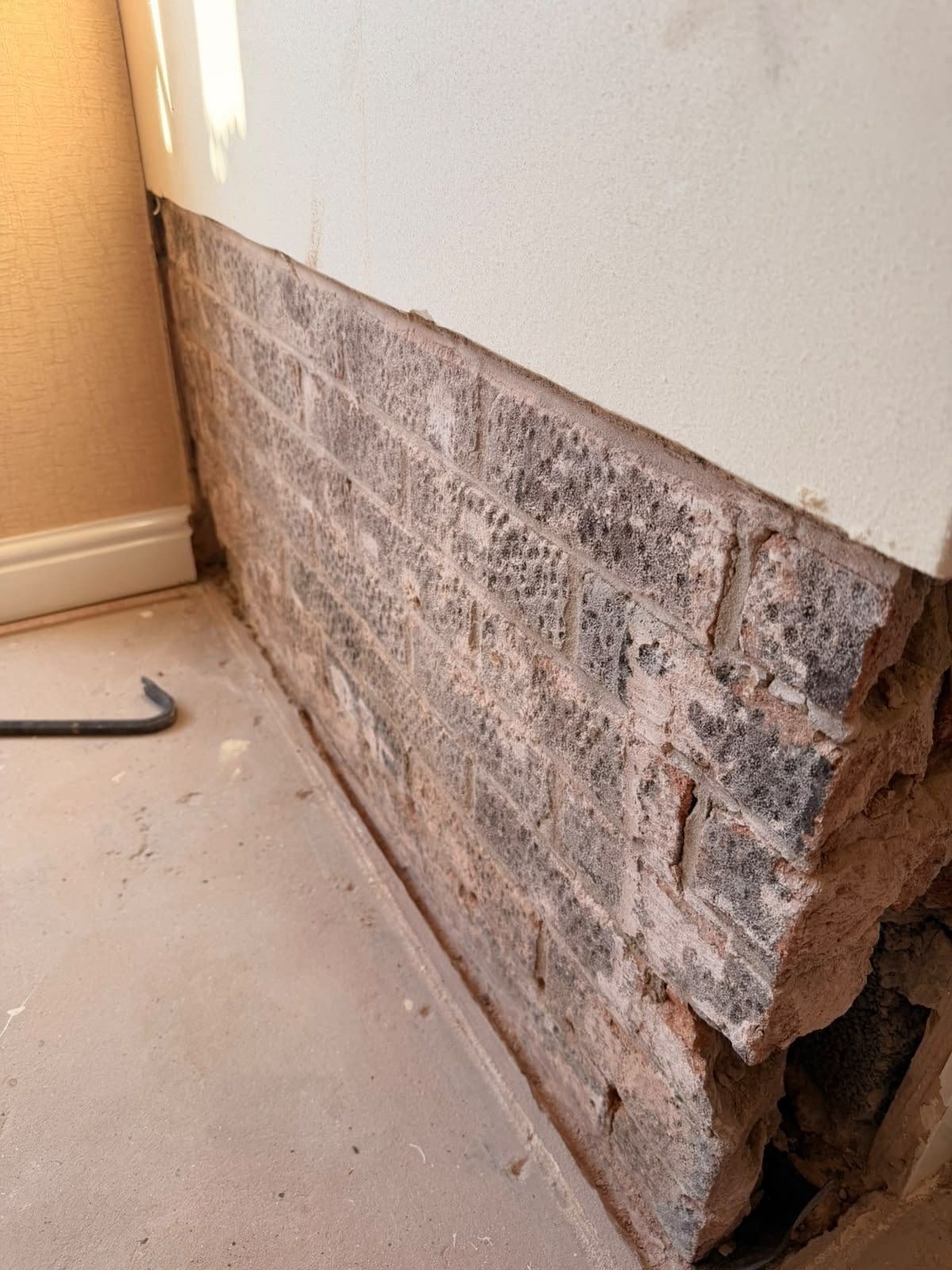
Hacked off 300mm past the last signs of damp
Plaster came off to 300mm beyond the last visible signs of damp, taking the wall back to brick along its length. Stopping at the edge of the stain is a common shortcut, and it leaves damp plaster behind the new finish to cause trouble later.
With the brickwork exposed, the wall build up could be inspected properly for the first time, which is where the real story started.
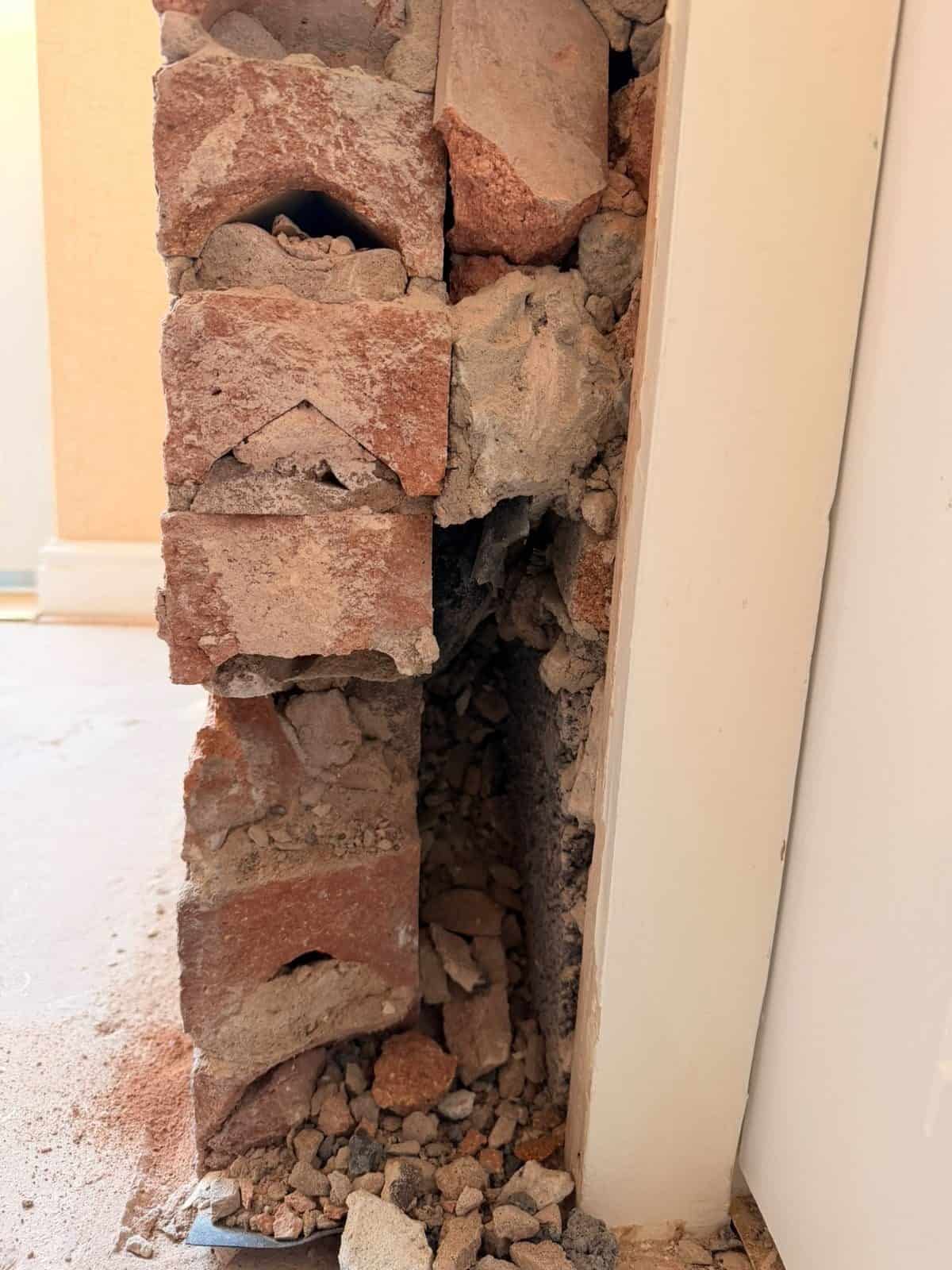
What was behind the plaster
Opening the wall at the door reveal showed the cavity packed with mortar droppings and broken brick, sitting on top of the black damp proof course. That debris gives moisture a continuous path from the damp floor straight past the DPC and into the wall above it.
The DPC itself was there. It was being bypassed. That is the difference between a bridged DPC and a failed one, and it changes what the right repair is.
Bridging is not rising damp
People often call this rising damp because the damp looks like it is rising. The mechanism is different. Classic rising damp is moisture drawn up through masonry that has no effective damp proof course. Bridging is moisture finding a way around a DPC that is still there, through debris, a raised floor level, render or a finish carried down too far.
That distinction matters because the fixes are different. Inject a new DPC into a wall that is being bridged and leave the bridge in place, and the damp comes straight back. Clear the bridge and the existing DPC can do its job again.
We filmed a short on-site explanation of the bridging on the day the works were completed.
Filmed on site, 14 September 2026
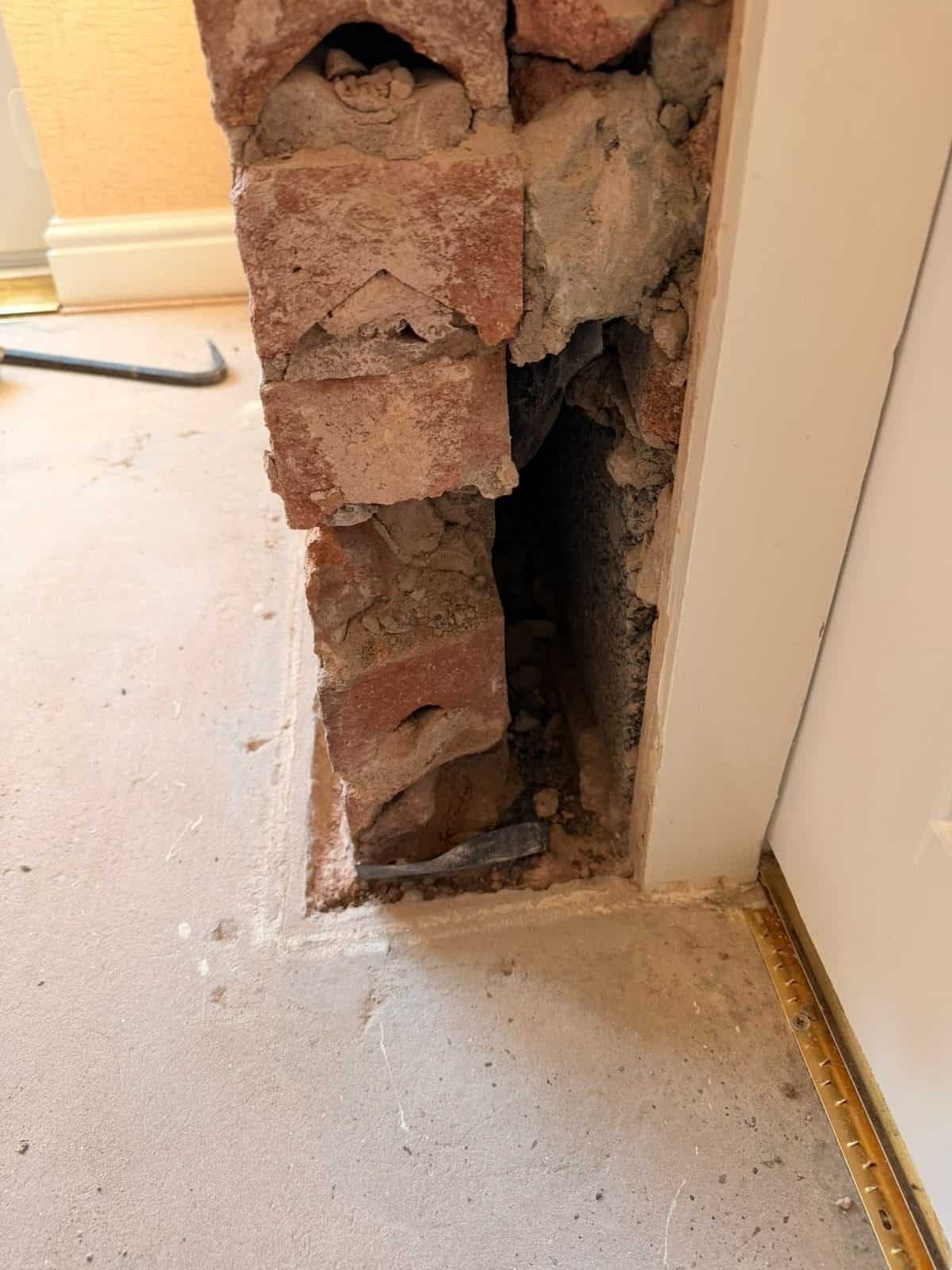
Clearing the bridge
The same cavity once the debris had been dug out, with the black DPC now visible at the base. Clearing this was the priority on the job, because until it was gone nothing done to the wall face would have lasted.
Alongside the clearance, the wall was treated with the Express Damp System where specified.
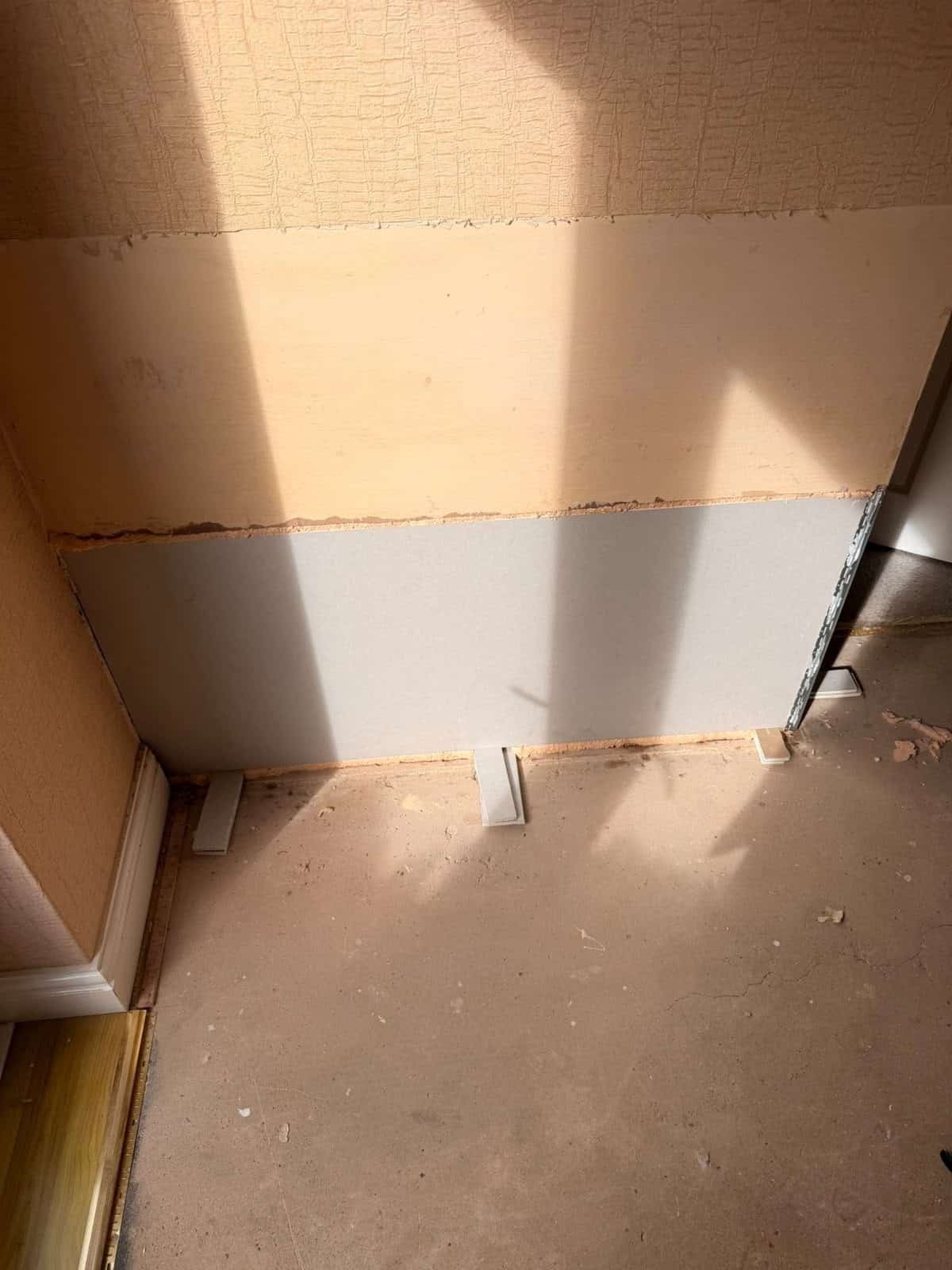
Making good without rebuilding the bridge
The easiest way to undo a job like this is to carry the new finish straight down onto the floor, which recreates exactly the path the old plaster gave moisture. The new board went on over plastic spacers, leaving a deliberate gap between its bottom edge and the solid floor.
It is a small detail that nobody sees once the skirting is back on, and it is the difference between fixing the bridge and simply moving it.
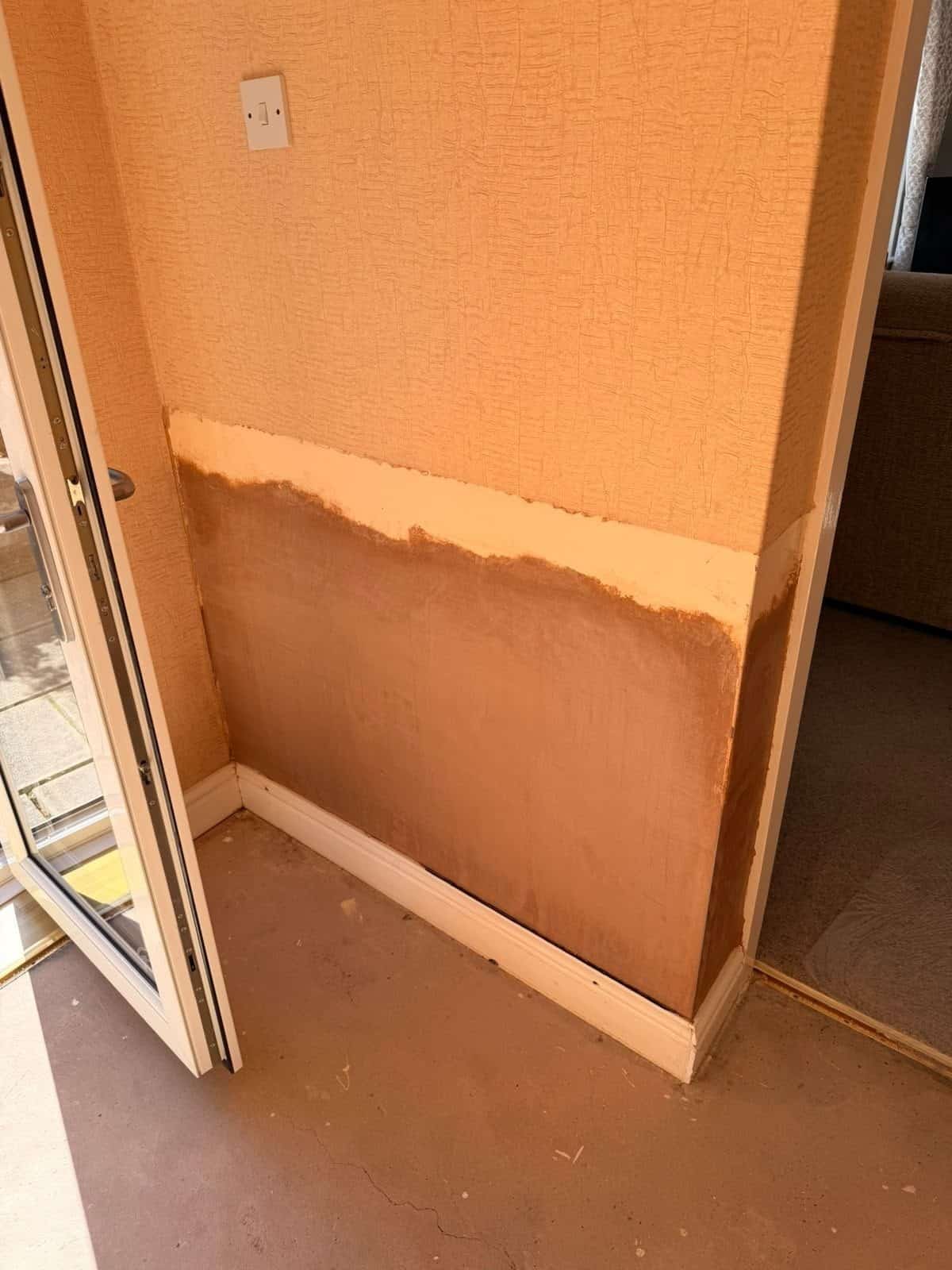
Replastered and skirting back on
The wall was made good and re-plastered to BS6576, with plasterboard repair and jointing where required and the skirting re-fixed. Fresh plaster is always this dark while it cures and lightens as it dries out.
The owner is left with a wall that can be decorated once dry, and a ten year guarantee that stays with the property.
Why small damp jobs can look dear
Most damp proofing firms work to a day rate. Two people and a van still have to leave the yard, and still carry the insurance, materials, travel and overheads, whether they are on a multi room package or a single wall. A small job that takes the best part of a day can look expensive next to the size of the patch being fixed.
That is not someone trying to rip you off. It is the minimum cost of a trained team turning out. PCA member companies with qualified surveyors also have to stand behind a diagnosis and a system matched to the type of damp, whether that is bridging, condensation, penetrating damp or classic rising damp.
That is why some homeowners go to a plasterer who does a bit of damp work. The quote can look cheaper. The risk is that nobody tells the difference between types of damp, so a job like this one gets injected as rising damp, the bridge stays in the wall, and the staining comes back.
The package at a glance
| Location | Cleveden Way, Royston, Barnsley |
|---|---|
| Area treated | Right hand side wall of a rear extension (the original house wall) |
| Survey | Damp & Timber Surveys limited scope visit, 5 August 2026 |
| Defect | Bridged existing DPC, with low level damp from moisture tracking up from the floor |
| Treatment | Bridging clearance, with the Express Damp System where specified |
| Also included | Plaster hack off and BS6576 re-plaster, re-fix skirting, making good |
| Completed | 14 September 2026 |
| Guarantee | Ten year Certificate of Guarantee, issued on full payment and transferable with the property |
How the job ran
- SurveyLimited scope inspection of the extension wall, recording the damp pattern and moisture readings.
- AcceptanceWorks instructed, including re-fixing the skirting.
- Open upPlaster hacked off to 300mm past the last signs of damp and the wall build up inspected.
- Bridging clearanceDebris bridging the existing DPC dug out, then documented with photographs and on-site video.
- TreatmentExpress Damp System applied where specified for the treated wall.
- Making goodRe-plaster to BS6576, plasterboard repair and jointing where required, skirting re-fixed.
- CompletionWorks finished 14 September 2026, with the ten year Certificate of Guarantee prepared for issue on full payment.
If you have damp on one wall
A single damp wall on an extension still needs the same discipline as a bigger job, even when the quote feels high for just one wall. That means a specialist damp survey so the type of damp is identified properly, works matched to the actual defect rather than a rising damp guess, attention to bridging when the wall is opened, and a guarantee that stays with the property.
We would rather price the small job properly than leave you with the wrong system on the wrong diagnosis.
Damp on one wall you cannot explain?
We are PCA certified damp proofing and condensation control specialists covering Royston, Barnsley, Sheffield, Rotherham, Doncaster and the wider Yorkshire area. We will find out what is actually causing it before we recommend anything. See our other recent work.
01226 287181Request a damp survey