




Fitting an Extractor Fan Through a Door Light in Barnsley
A kitchen that needed continuous extract with no route through an external wall. We fitted an Elta DEXA dMEV 100 through the frosted glass above the back door, and a measurement check on site stopped the glass being cut 10mm too small.
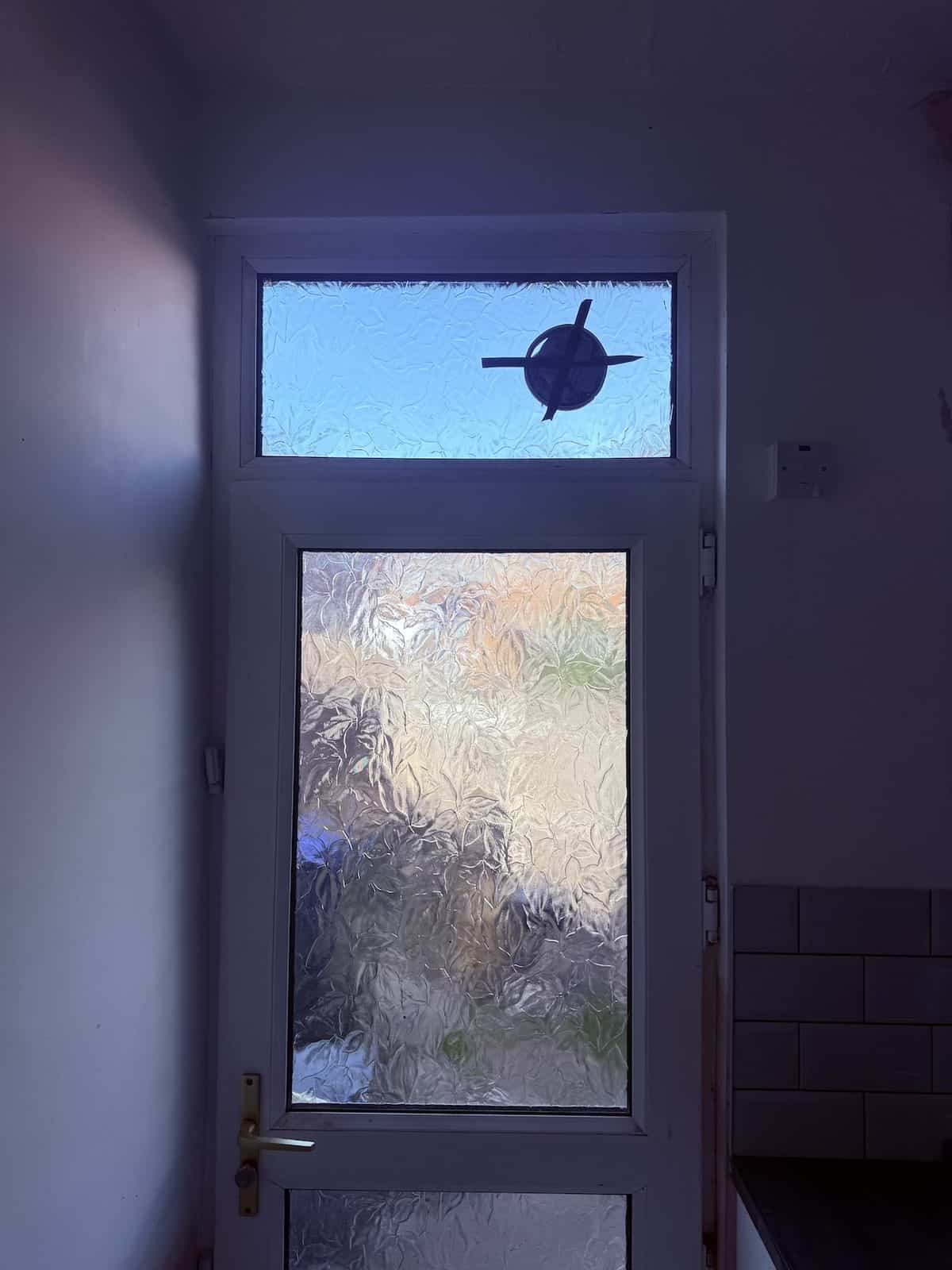
Extract was needed, but the wall was not an option
This kitchen formed part of a wider preservation job in Barnsley. It needed controlled extract ventilation, but wall mounting would have meant chasing through finishes we could not sensibly open up, or an impractical duct run to reach daylight.
The answer stopped being difficult as soon as we stopped looking for a wall. The frosted door light above the external door faces outside, sits at a workable height and can take a purpose made window kit. That upper pane became the discharge route.
Why a dMEV rather than a bathroom fan
Condensation is usually a problem of moisture load, cold surfaces and poor air movement rather than a failing damp proof course, so the fix has to keep working without anyone thinking about it. We specified an Elta DEXA dMEV 100 with the matching Elta window kit.
- Continuous trickle extract with automatic boostIt runs gently all day and works harder when cooking or washing pushes humidity up, rather than waiting for someone to remember a switch.
- Very low running costAn EC motor, with trickle running on the 100mm model drawing around a watt.
- Quiet at low speedWhich matters in a kitchen sitting next to living space.
- Rated for window mountingWall, ceiling or window, provided the manufacturer's window kit is used. Elta are clear that glazing installs need the matching kit to stay weatherproof and keep the warranty intact.
- IPX4 rated with SAP PCDB listed performanceSo it stands up to a damp room and the figures are there for energy conscious specifications.
Extract fans are one of the most effective room level fixes we have, but only when the type, the sizing and the discharge route are all right. More on how we approach this on our condensation control page.
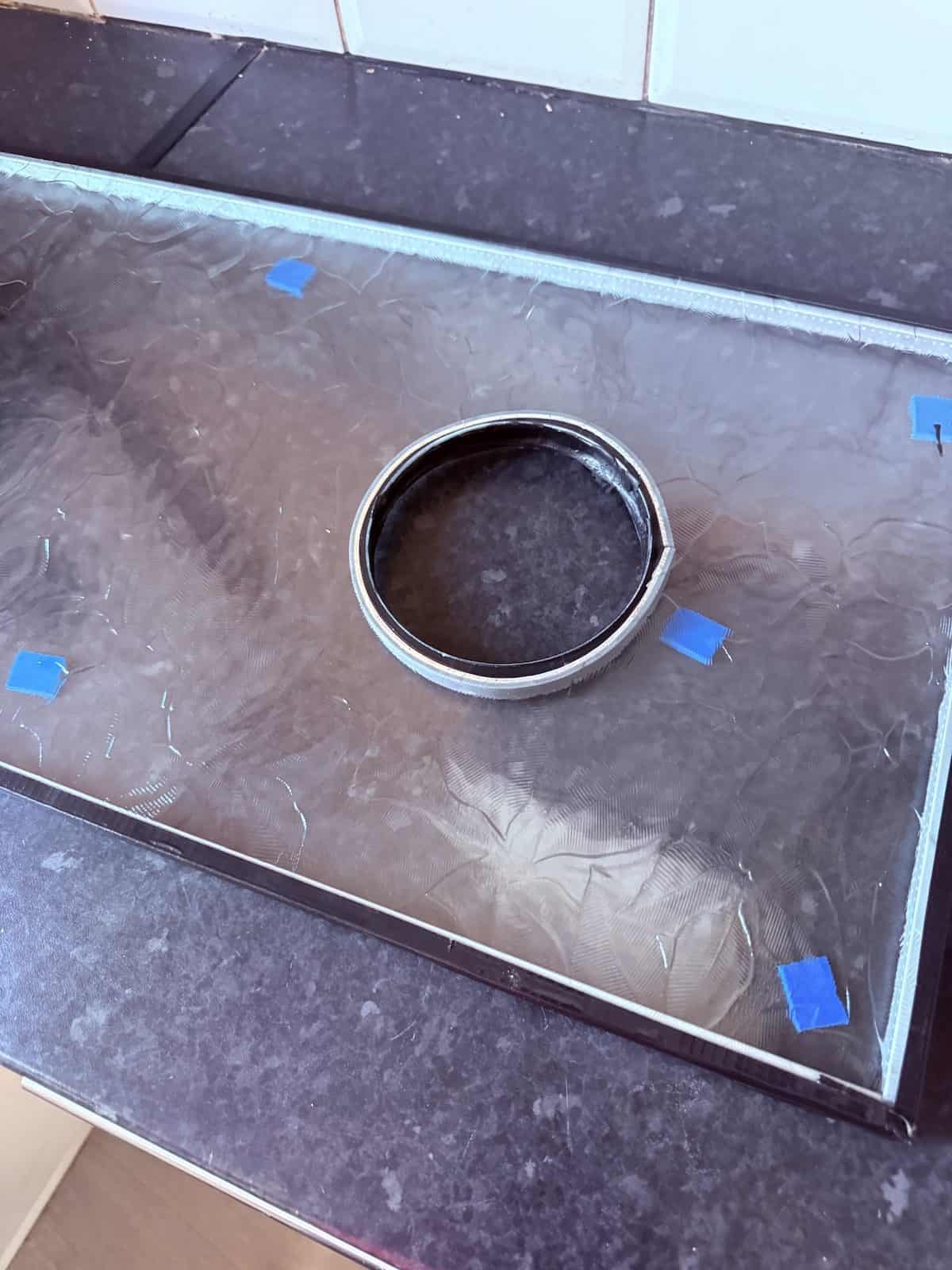
Glass out, toughened glass back in
The door light pane had to come out so a joiner could cut a clean circular aperture in a replacement panel. Once you are putting a hole through a glazed door light, toughened glass is the right call for strength and safety.
One pleasant surprise: the replacement panel came back far lighter than we had braced ourselves for. Toughened units have a reputation for being awkward on site, and this one was not. Lifting it, offering it up and bedding it back into the door light was straightforward.
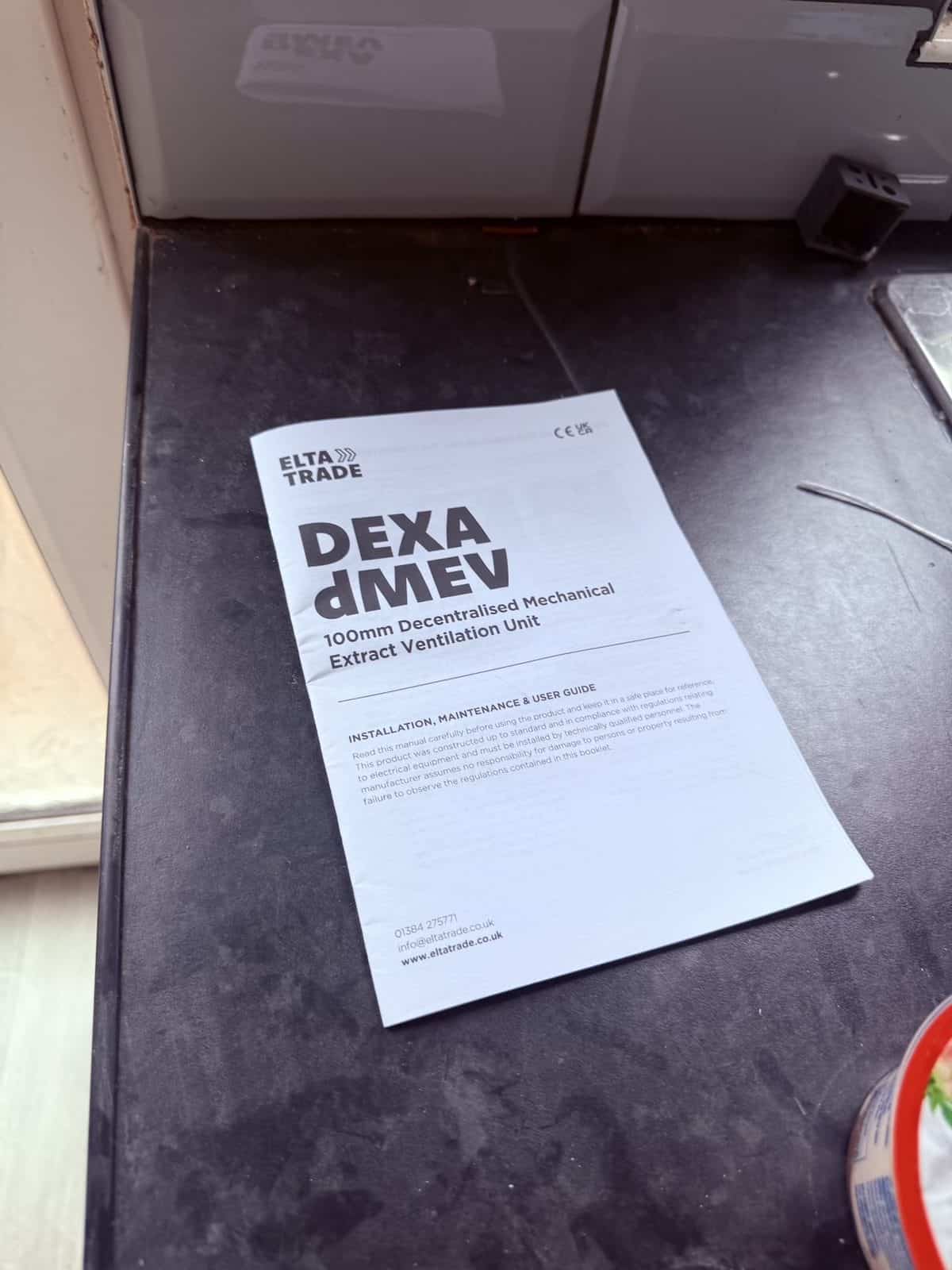
The measurement that nearly cost a pane of glass
While a PCA auditor was on site reviewing the wider preservation works, we were both looking at the fan. The figure discussed at that point was the one you hear constantly in the trade for 100mm window kits: a 100mm fan needs roughly a 115mm hole. That is what went across with the glass to be measured and cut.
A few days later, with the actual Elta fan and cover in our hands, we measured the rear of the cover ourselves. The opening the kit needed was a minimum of 125mm, not 115mm. Ten millimetres does not sound like much, but a hole that tight means the kit will not seat, the seal will not work, and you are into a wasted toughened pane, a re-cut and a delayed job.
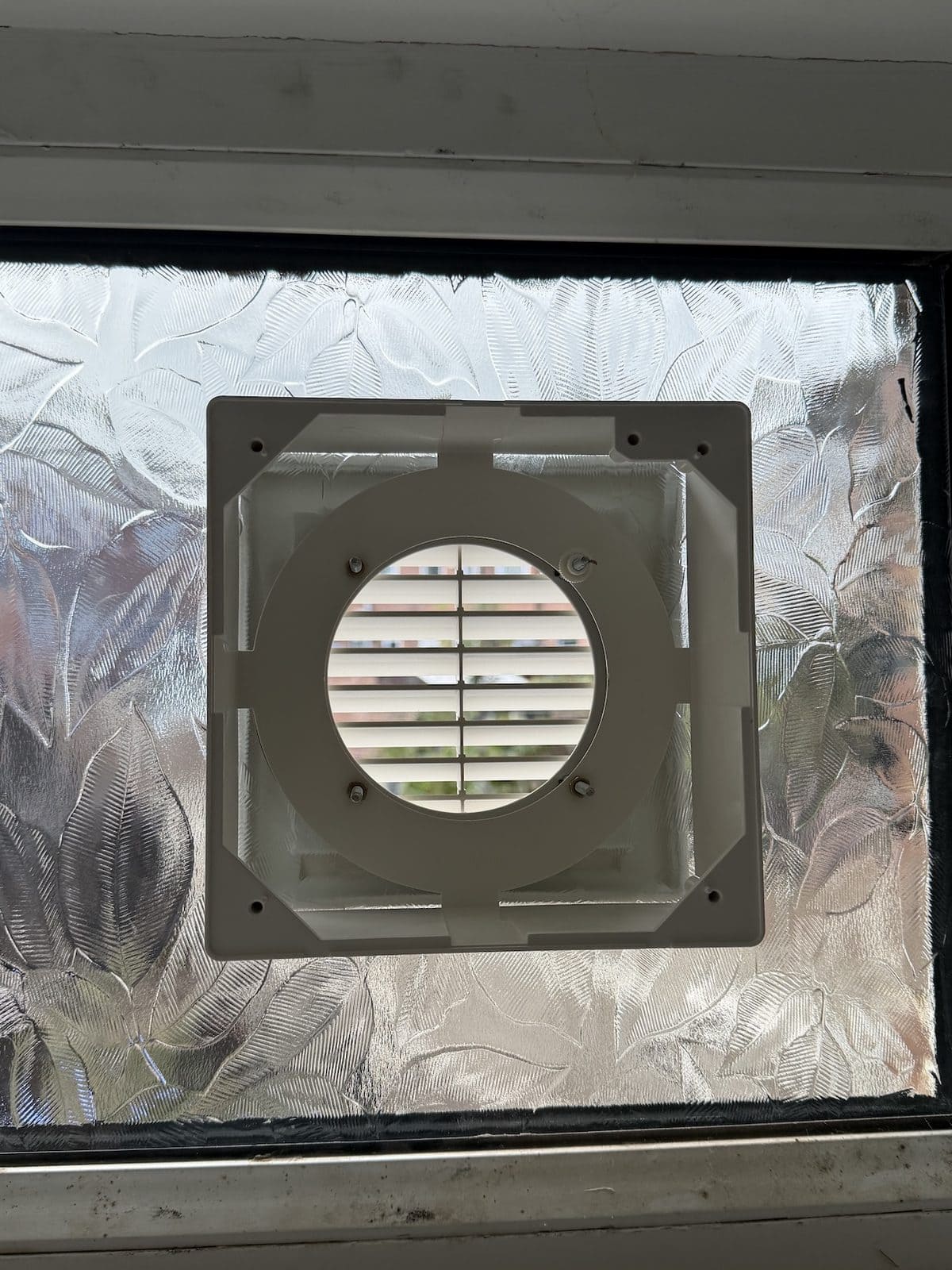
The window kit through the door light
With the aperture cut correctly, the Elta window kit could go in: outer grille to the weather, inner frame seating through the pane, giving a sealed path for the fan body.
From inside you can see the horizontal louvres of the fixed external grille and the square kit frame sitting flush to the patterned glass. That weatherproof interface is the whole reason Elta insist on the dedicated kit rather than a hole and some optimism.
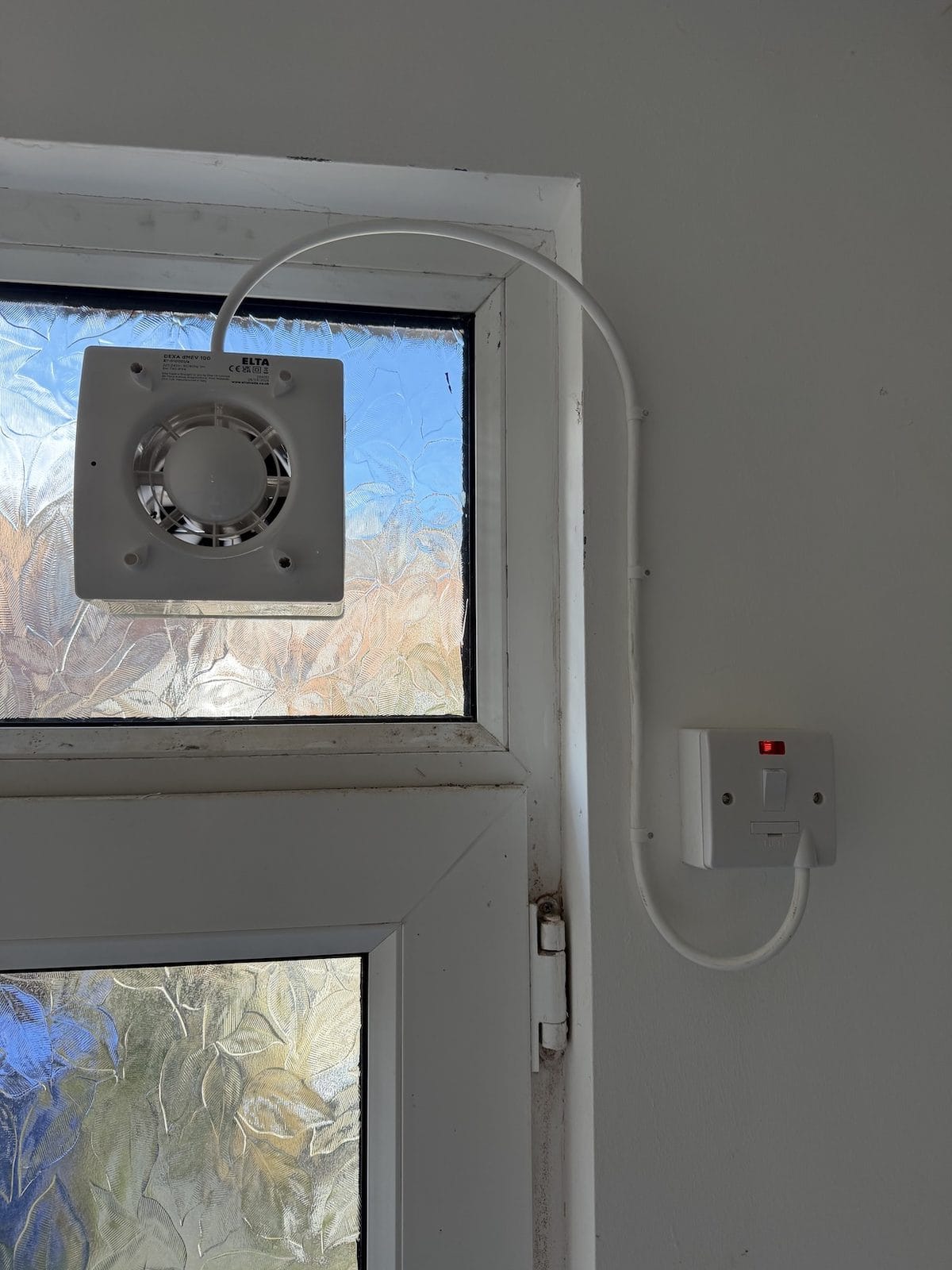
Fan body in, cover off
The DEXA body seats onto the kit from the inside, impeller and mounting plate visible here before the fascia goes on. This is the stage where the 125mm aperture proves itself, because the spigot either passes cleanly through the kit or it does not.
Cabling runs from the fan along the frame in white trunking, kept off the glass and out of the way of the door swing.
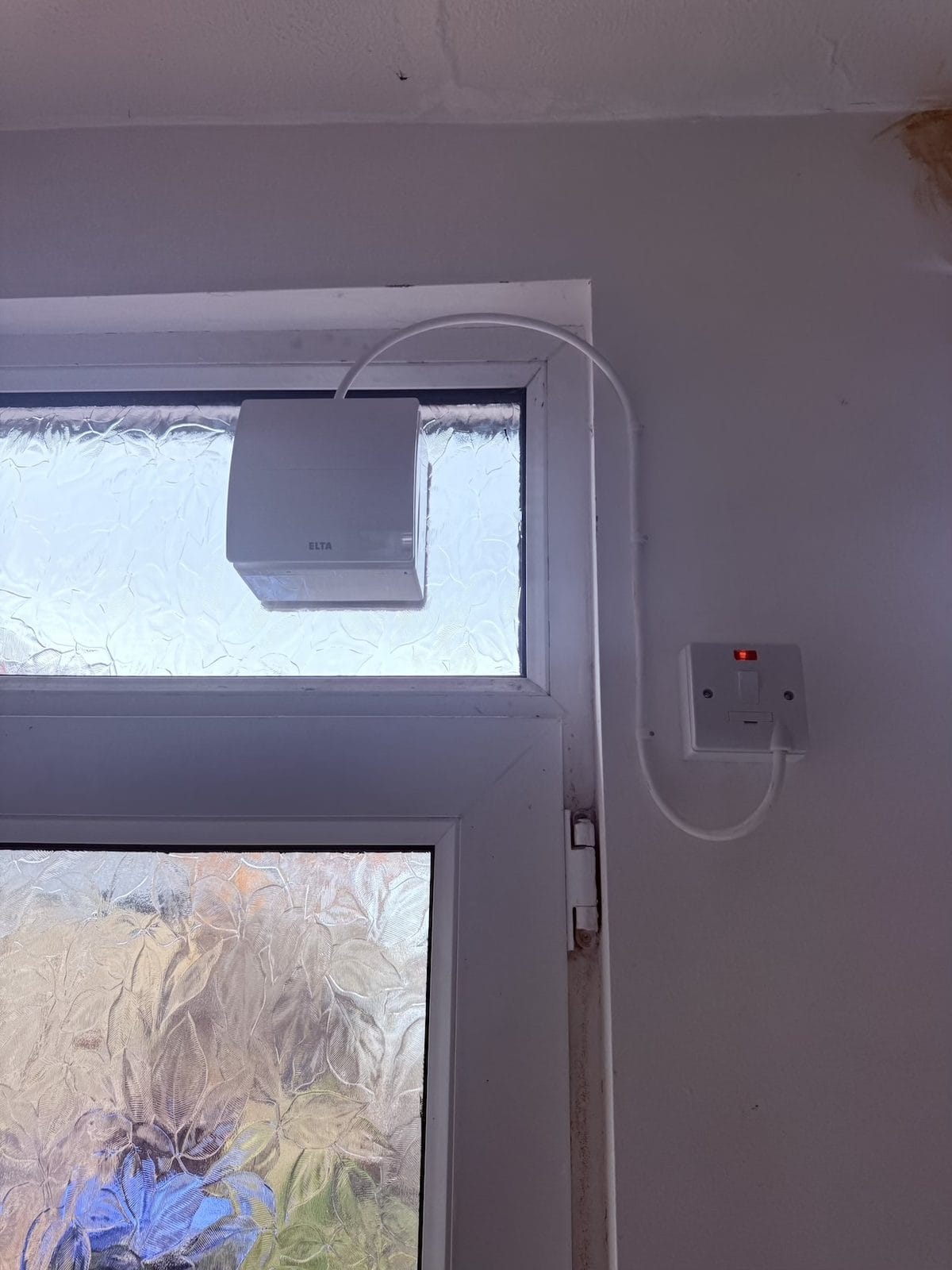
Finished inside, on its own fused spur
The finished unit sits cleanly in the upper frosted pane with the cable clipped along the frame. We ran a neat surface feed to a dedicated fused spur beside the door light, so the fan can be isolated for servicing without touching the rest of the kitchen circuit.
That is good practice on any permanent extract install. A fan that runs continuously will need cleaning and eventually replacing, and nobody should be pulling a kitchen circuit to do it.
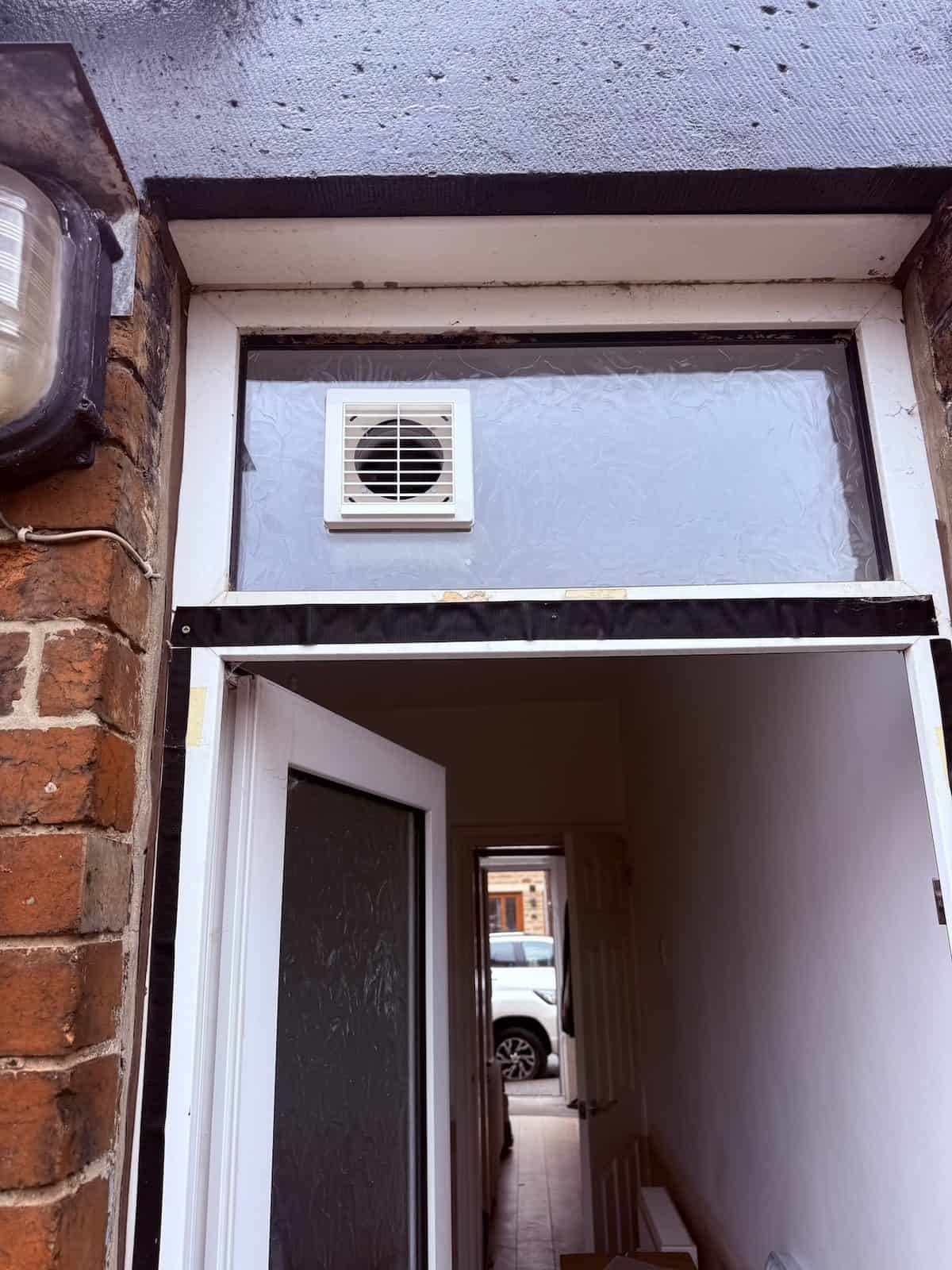
And from outside
From the yard, the fixed external grille sits in the door light discharging straight to open air. No duct run, no void, nothing to obstruct it.
The homeowner now has continuous low level extract through a proper external grille, an automatic humidity boost when the kitchen needs it, and a weatherproof mounting that protects both the fan and the building fabric. None of it required opening up a wall that could not take a duct.
What this means for homes across South Yorkshire
A lot of local stock, the terraces, semis and mid century kitchens across Barnsley, Sheffield, Rotherham and Doncaster, has the same constraint we met here. You need extract, but the obvious wall line is blocked by units, a boiler, a neighbouring structure, or finishes nobody wants to destroy. Window and door light mounting, done with the manufacturer's kit, is a legitimate and fully supported answer.
If you have streaming windows, black mould in a kitchen or bathroom, musty smells after cooking or bathing, or condensation that keeps returning after a clean, it is worth a proper condensation assessment. Sometimes the answer is one well placed dMEV fan. Sometimes it is PIV, background vents, heating habits, or a combination. We will tell you which.
“Never size a glass cut from the usual trade figures alone. Measure the specific window kit and fan cover in your hands, check the manufacturer's install notes for that product, and only then instruct the glazier.”
All Dry Damp Proofing, on the lesson from this install
Condensation or mould you cannot shift?
We survey properly and recommend the right ventilation or damp solution for your property, whether that is a window mounted fan like this one or a whole house approach. See our condensation control and damp survey pages.
01226 287181Request a survey