




A Failed Sump and Pump System in a Leeds Cellar
A converted cellar with a cheap sump and pump installed with no reference to BS 8102, failing within a short time and taking the room down with it. Here is what we found on survey, and what a compliant system should look like.
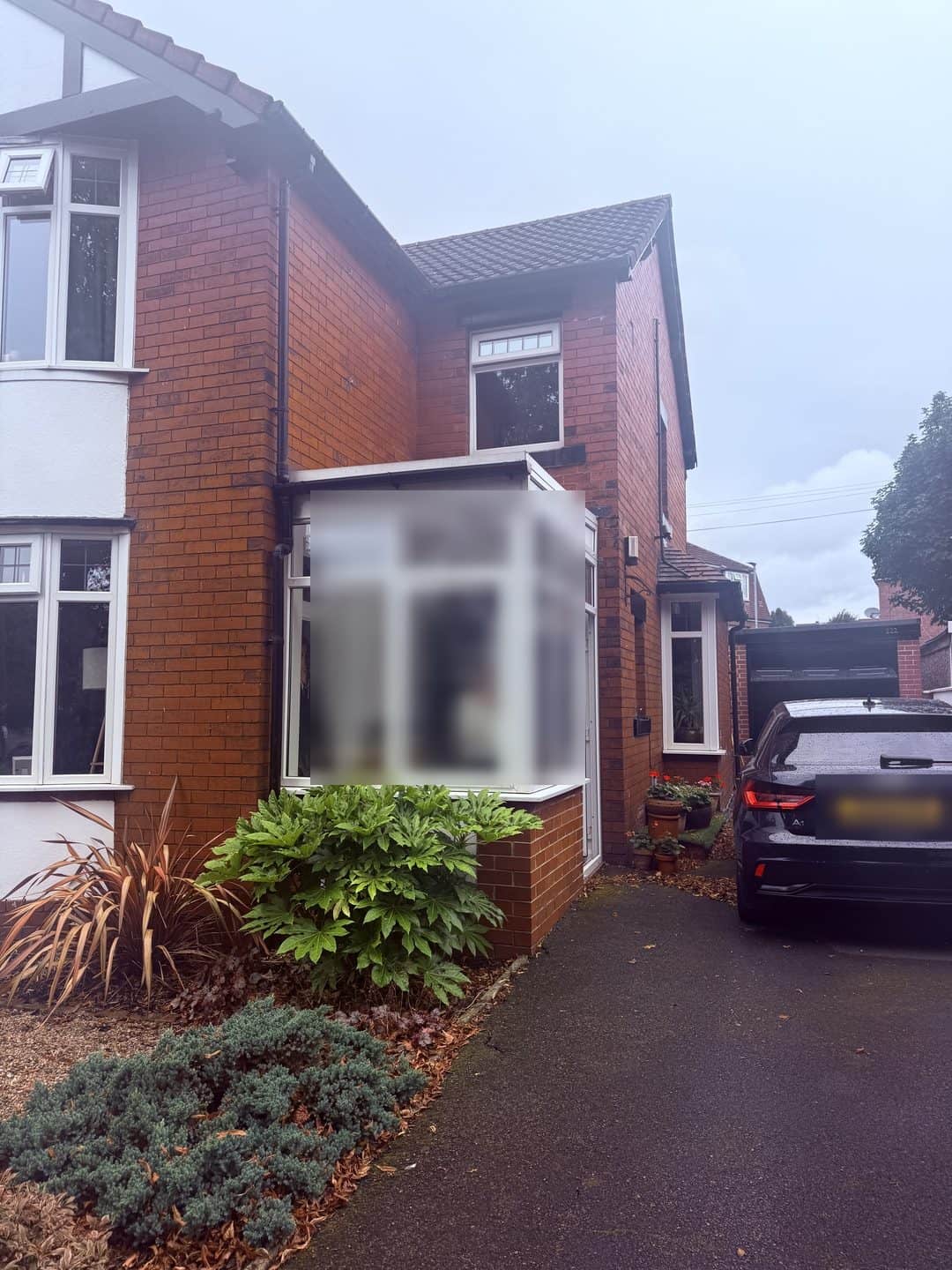
An ordinary Leeds semi with a converted cellar
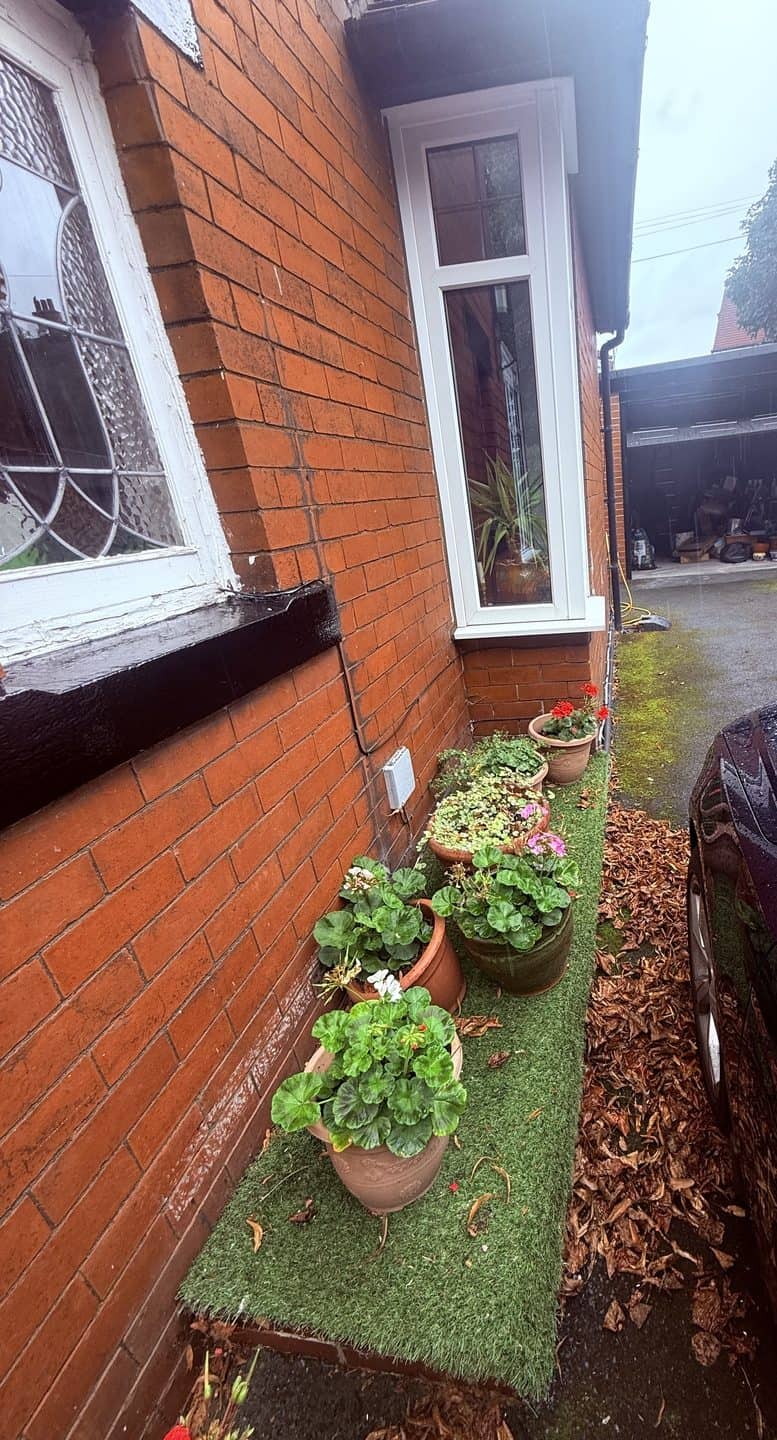
The property is a red brick semi in Leeds with a cellar running below the front of the house, converted at some point into a utility and laundry room of roughly 3m x 3m.
It sits lower than the houses either side, with a narrow side passage running down towards the road. That gradient matters. It is one of the first things we look at when a below ground room keeps taking water, because it changes where the water is likely to be coming from.
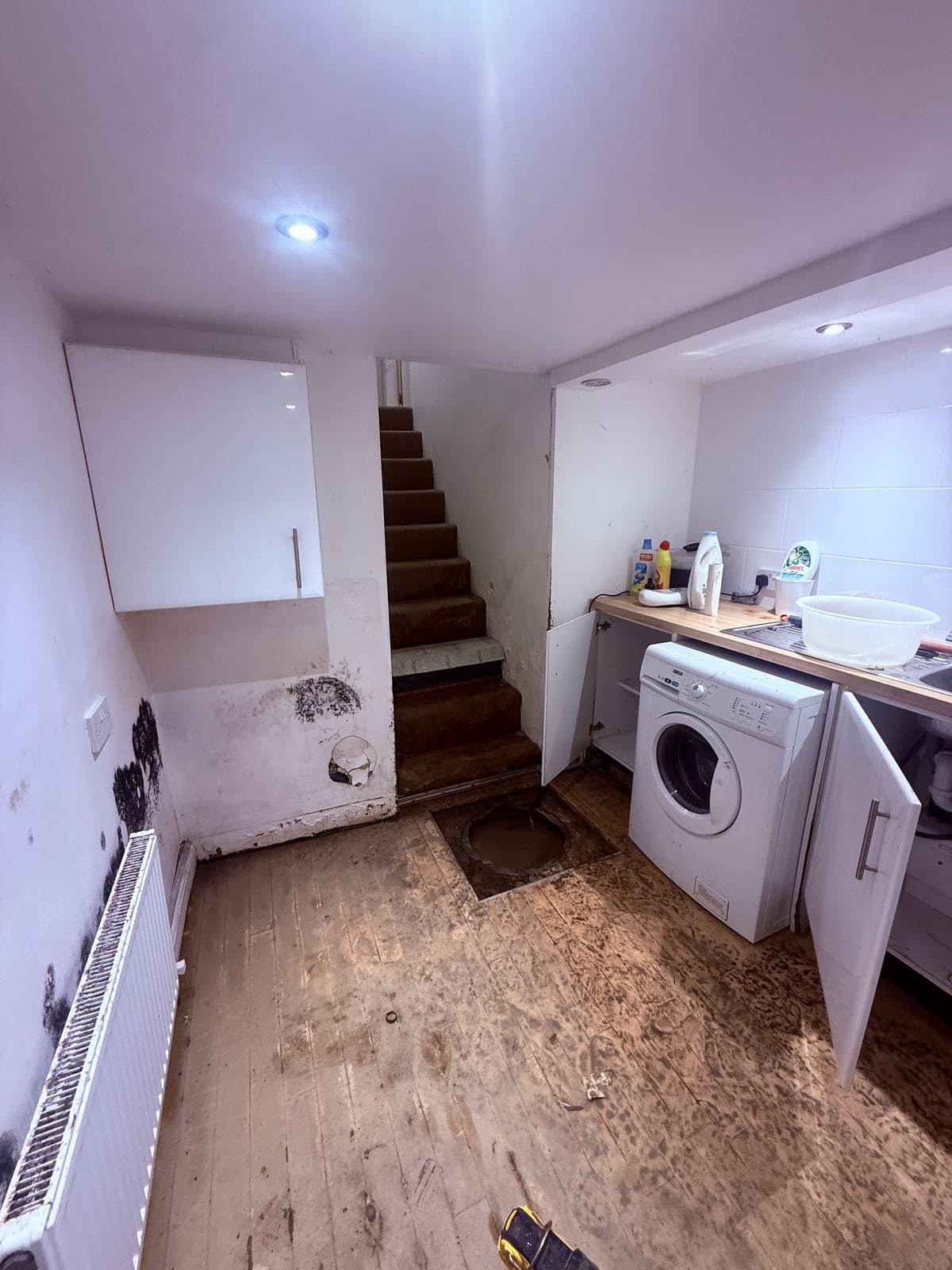
A utility room built over a system that could not cope
At some point a sump and pump had been fitted to deal with water ingress and, on the face of it, that looked like a sensible fix.
By the time we were called in, the units had been stripped back, the timber floor deck was rotten underfoot, and mould and salt staining had spread well above skirting height. The system had been installed with no regard for BS 8102, the British Standard covering waterproofing of below ground structures, and it was already failing.
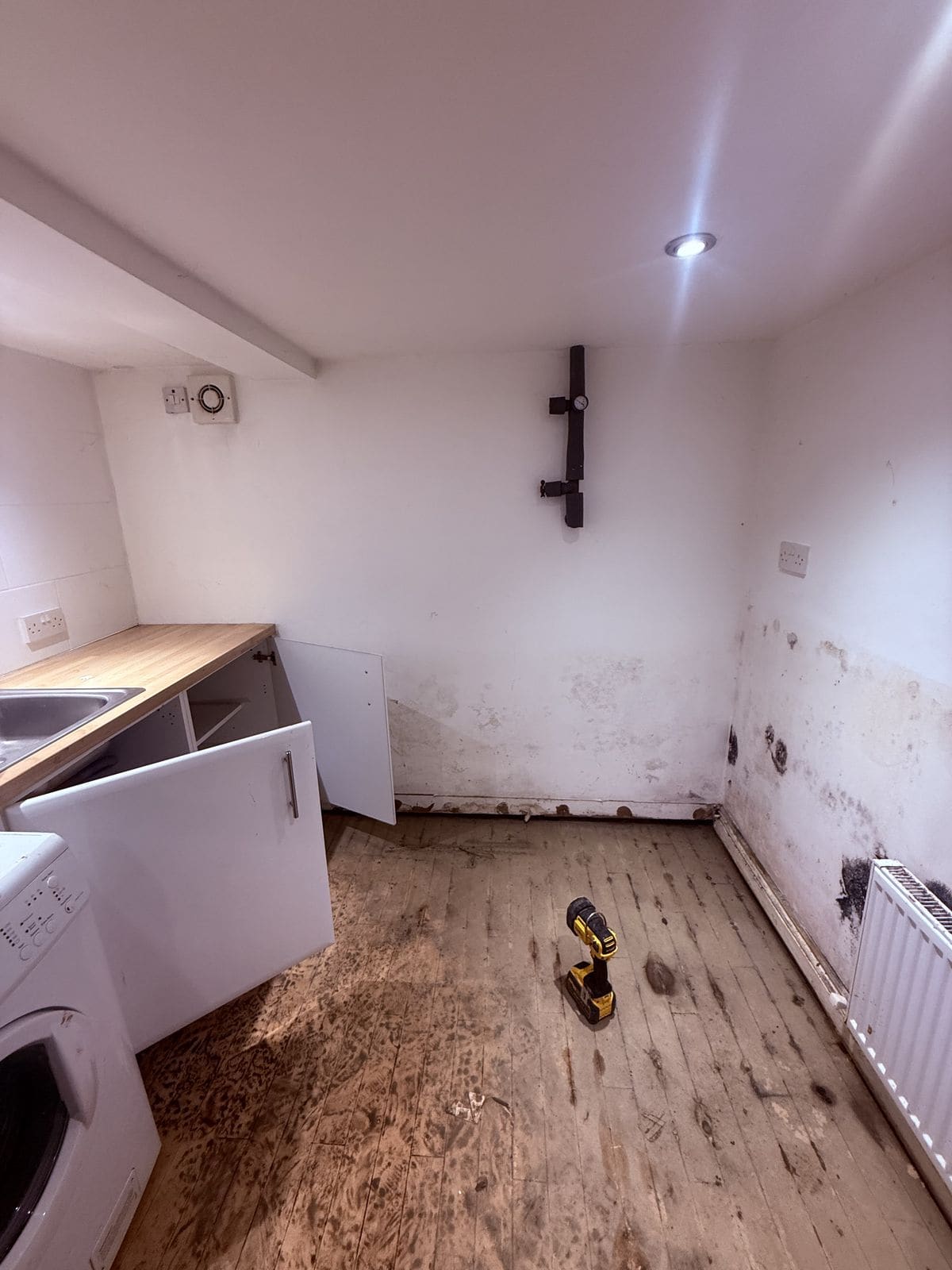
Mould and efflorescence well above skirting height
Black mould had colonised the rear and side walls, alongside the white efflorescence visible across the plaster. Efflorescence is a salt deposit left behind as water moves through masonry and evaporates, so a band of it at this height tells you water has been travelling through the wall for a long time rather than simply condensing on the surface.
There was no cavity drain membrane behind the finishes to intercept that moisture and carry it down to a drainage channel, so every bit of water reaching the wall had nowhere to go but into the room.
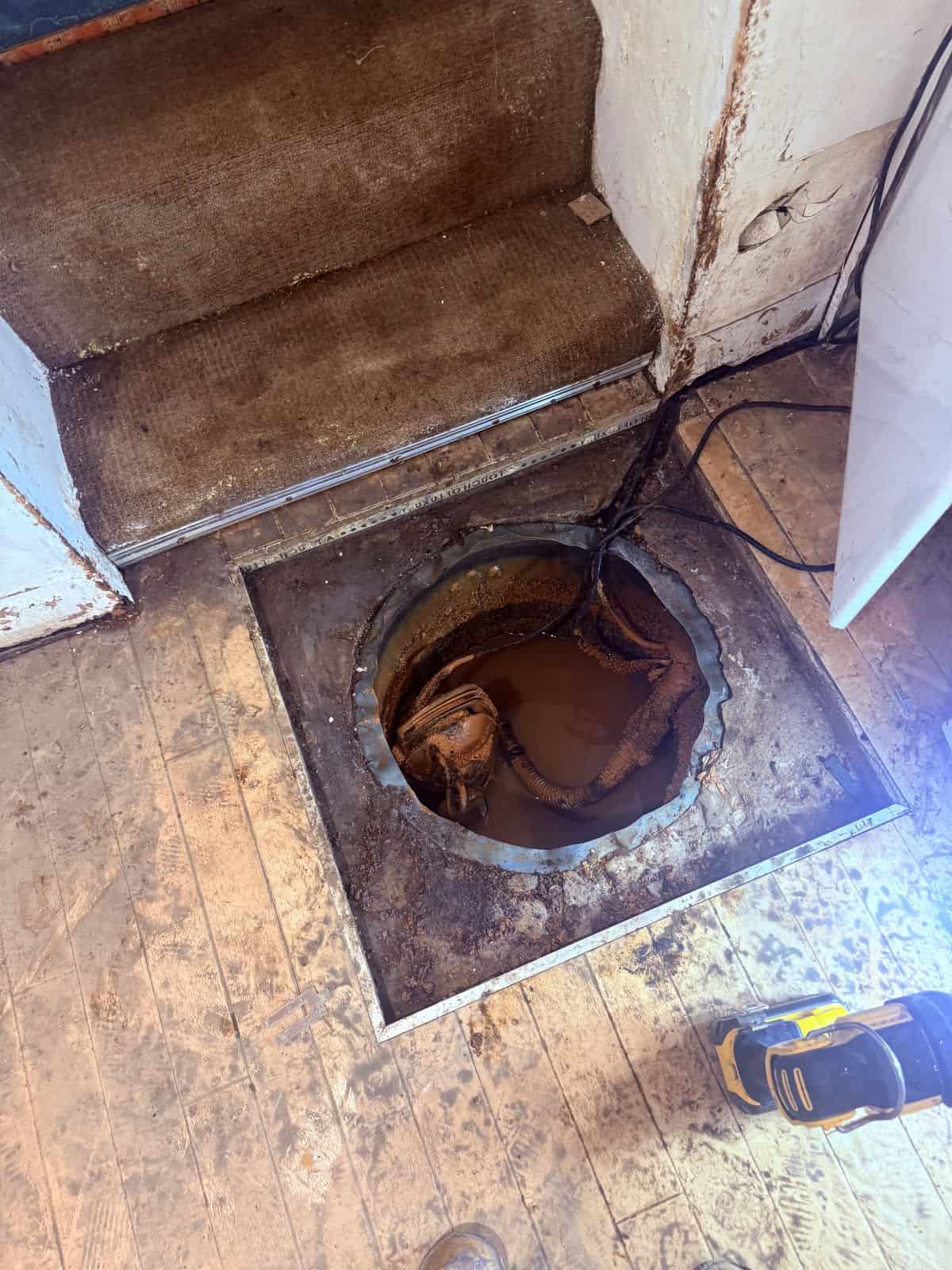
A sump chamber dropped into a timber floor
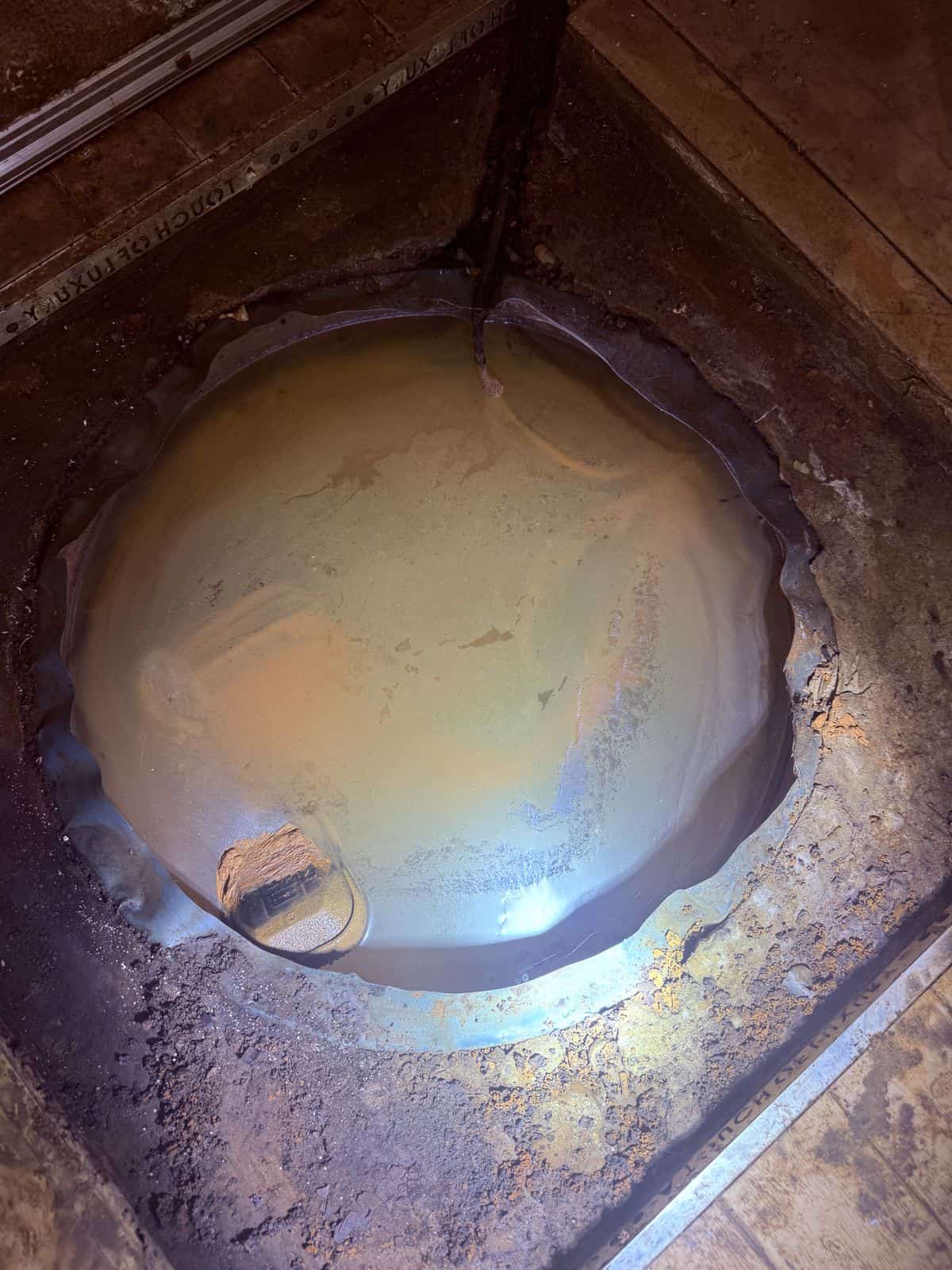
The chamber had been set into an opening cut through the timber floor deck, right at the bottom of the cellar steps. The surround was corroded and there was no sign of it having been sealed into a prepared concrete base.
That concrete surround is not a detail you can skip. It is what stops ground water and sediment finding a path in around the outside of the chamber, and it is what holds the chamber square and stable over time.
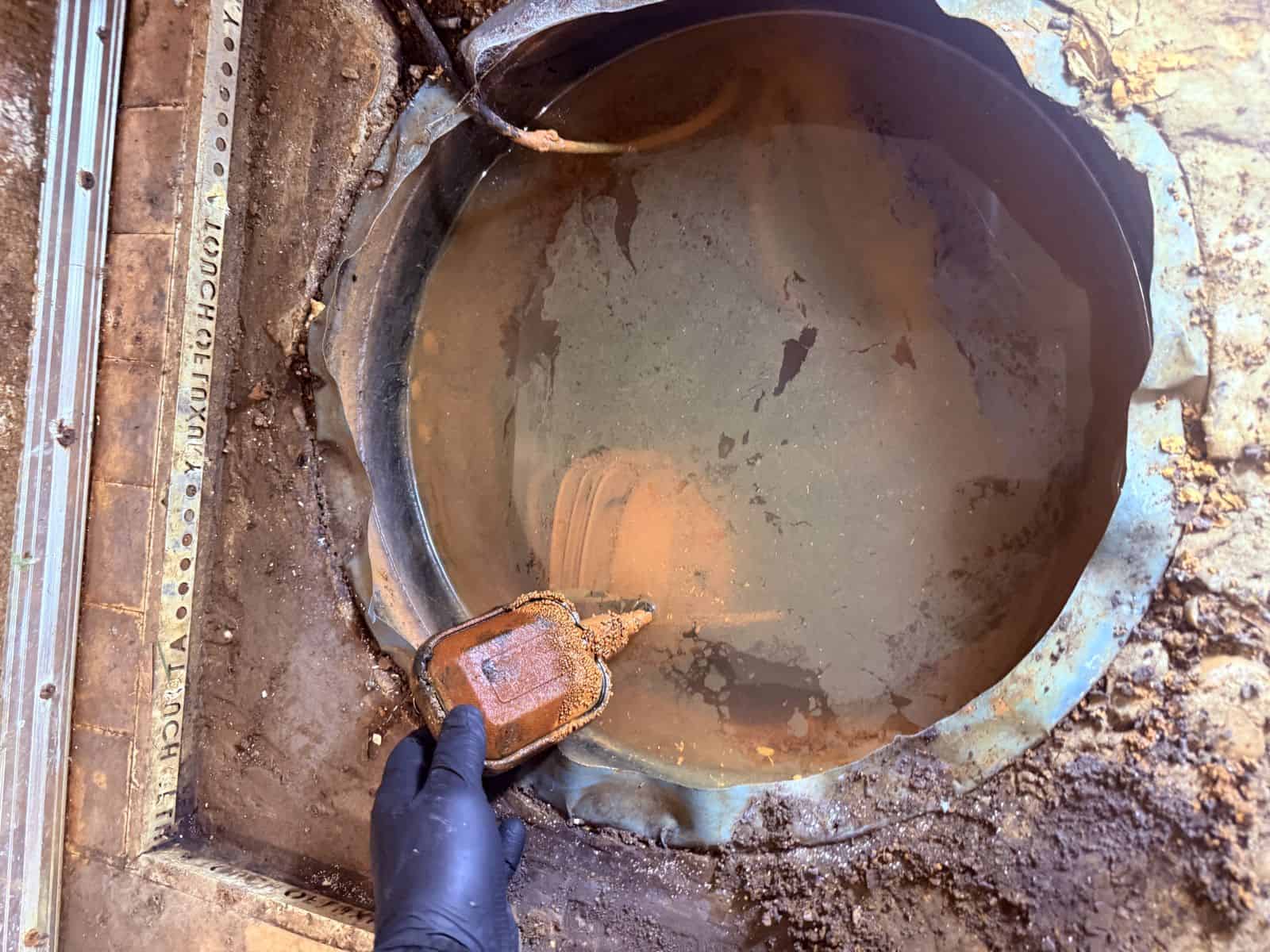
No sealed lid, just a rusted steel plate
The chamber was covered by a corroded steel plate rather than a purpose made, sealed lid. Lifting it revealed standing water and silt in a chamber that had clearly never been maintained.
A sealed lid matters for two reasons. It keeps debris from dropping straight into the chamber and jamming the pump, and it stops damp air and drain odours passing freely into the room above.
Why the original installation failed
None of these failures is unusual on its own. Together they describe almost every cheap sump and pump job we get called out to put right, and we have written before about why sump pump specification matters.
- No BS 8102 design basisBS 8102:2022 sets out how below ground waterproofing should be specified and installed according to how the space will be used, as Grade 1, 2 or 3. There was no evidence this system had been designed against any recognised standard.
- Single pump, no redundancyNo second pump, no battery backup and no high level alarm, so the first failure is also the first flood.
- Poor sump constructionA corroded, heavily silted chamber with no properly sealed concrete surround, letting sediment wash in and clog the pump over time.
- No floor or wall membraneWater was tracking up into the masonry with no cavity drain membrane to intercept it, which is why the mould and efflorescence had spread across most of the rear and side walls.
- Ventilation not fit for purposeThe existing extractor was a basic intermittent fan, unable to manage the humidity load in a room already dealing with active water ingress.
- Underlying cause never investigatedNobody had checked whether the water was rising ground water or a drainage fault before the system went in.
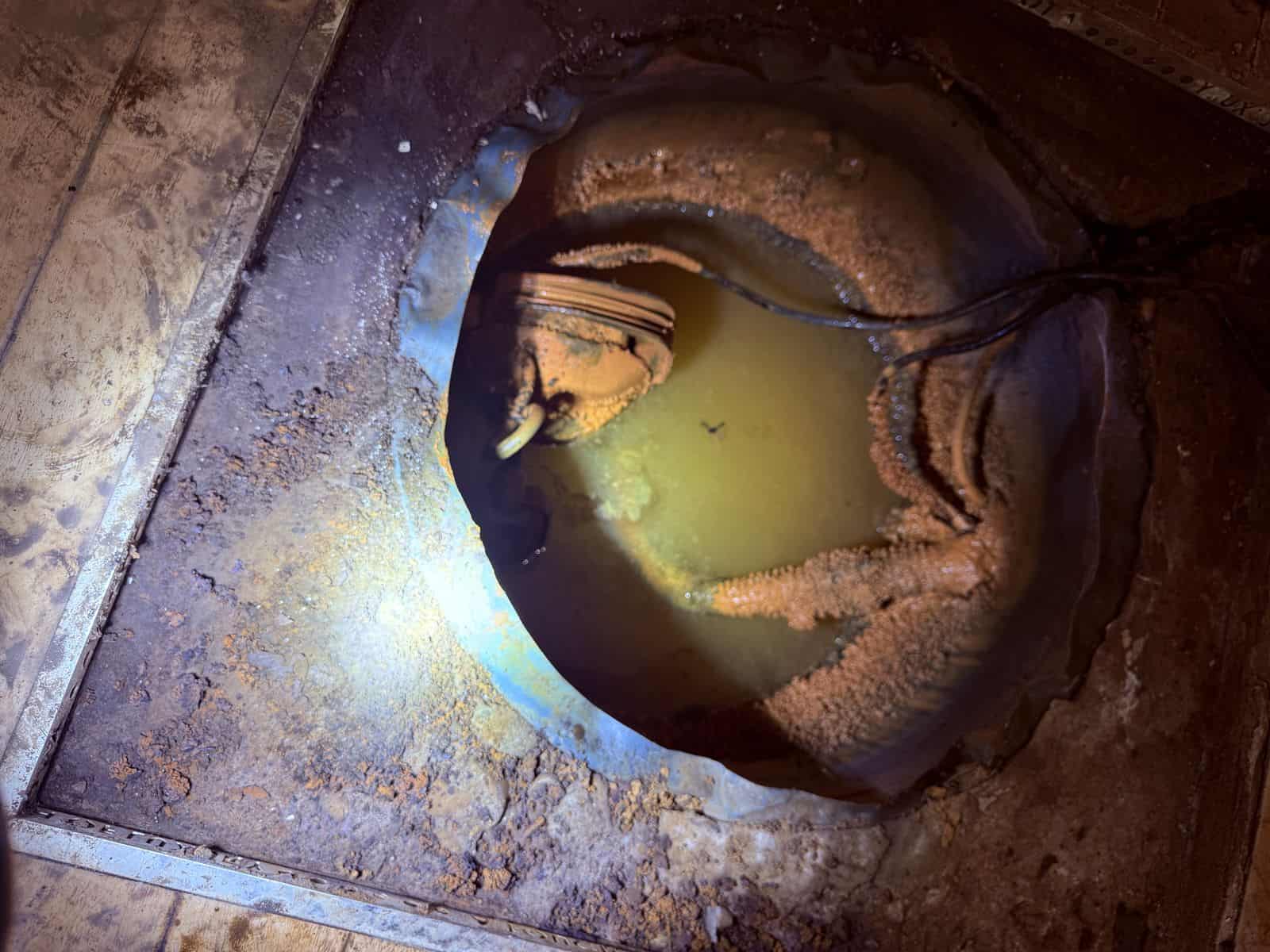
One pump, no backup, no alarm
A single pump sat in standing water at the bottom of the chamber. One pump with no second unit means that the moment it jams, fails or loses power, the room floods. There was no battery backup for a power cut and no high level alarm to warn the homeowner before water reached floor level.
For a room used for laundry and storage, in a house where nobody is checking the chamber day to day, that is not a system anyone should be relying on.
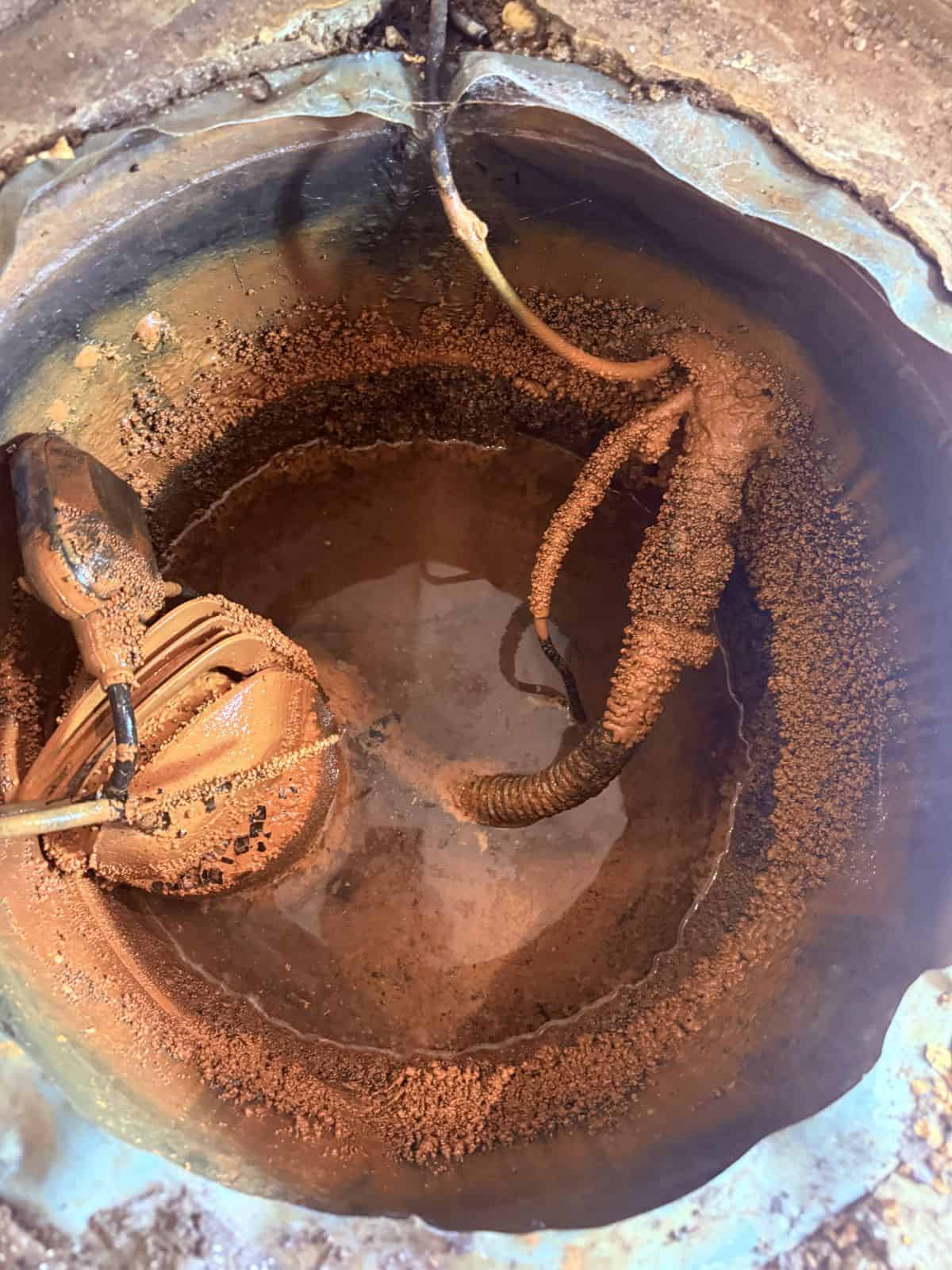
Heavy silt packed around the pump and cabling
Inside, the chamber was heavily silted, with sediment banked up around the pump body and the cable runs. Silt at this level points to one of two things: a chamber installed into unprepared ground that has been drawing sediment in ever since, or one that has simply never been cleaned out.
Either way, silt is the most common single cause of a sump pump jamming, and a pump that jams in a room with no alarm is a flood waiting to happen.
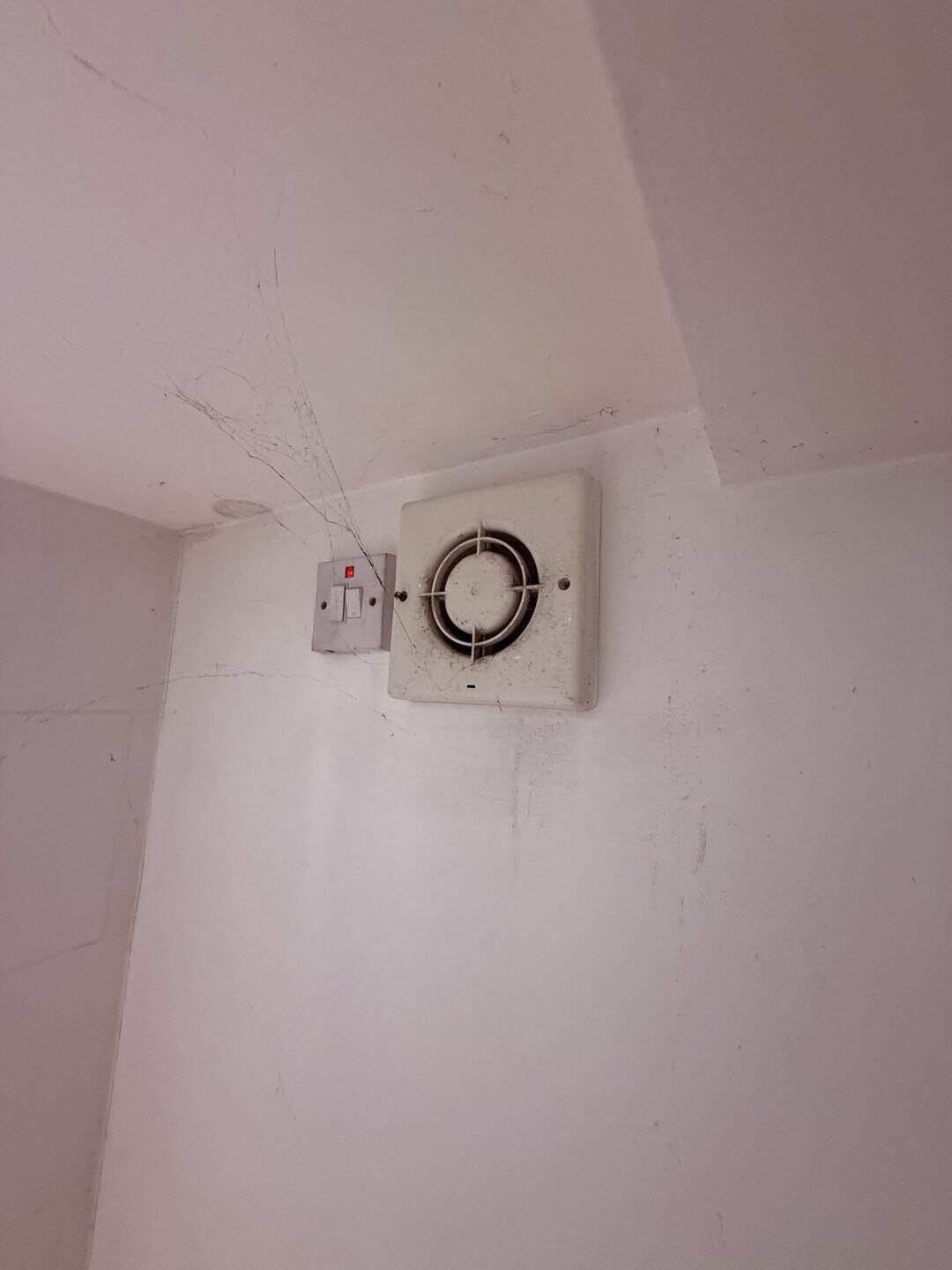
An intermittent extractor doing a dehumidifier's job
Ventilation was a single basic extractor fan, the sort fitted in a bathroom, wired to run intermittently. In a room with active water ingress, wet laundry and no through draught, that fan was never going to shift the moisture load.
The cobwebs across the grille tell their own story about how much air was actually moving through it. Undersized ventilation does not cause damp on its own, but it lets surface condensation and mould take hold on walls that are already wet.
The water source was never investigated
Nobody had established where the water was actually coming from. The property sits downhill from its neighbours and there is a side drain running down towards the road, so a drainage fault is at least as likely here as rising ground water.
That distinction matters. A drainage defect can often be repaired for a fraction of the cost of a full waterproofing system, and waterproofing a cellar without fixing a leaking drain simply hides the problem. A CCTV drain survey should always rule it in or out before anything is specified, which is exactly how we approach every damp survey.
How this should be put right
Our specification for this cellar follows BS 8102:2022 and deals with the cause before the symptom.
- Diagnose before we waterproofA CCTV drain survey of the side drain, plus a request for the local water authority to inspect the wider drainage run, before assuming this is simply ground water.
- No gap in protectionThe existing sump and pump stay running throughout, so the room is never left without pumped drainage while the new system goes in.
- BS 8102 Grade 3 specificationA new dual pump sump with battery backup and high level alarm, correctly sized and set into a proper concrete surround with dedicated plumbing and wiring rather than a bolt on kit.
- A full cavity drain systemPerimeter drainage channels, a 20mm cavity drain membrane to the floor with a floating Cabershield deck over the top, and correctly detailed cavity drain membrane to the walls once they are stripped and prepared.
- Ventilation matched to the problemA wall mounted PIV unit in place of the old intermittent extractor, providing continuous filtered fresh air rather than relying on a basic spot fan. Our condensation control page explains how these work.
“Damp proofing and waterproofing is specialist work. When it is done properly the first time it is invisible, and you never think about it again. When it is done badly it is one of the most stressful problems a homeowner can face.”
Simon Cooper, HNC CSRT CSSW
The real cost of cutting corners
Cavity drain waterproofing, sump and pump installation and structural drainage are specialist trades, governed by their own British Standards and industry qualifications for good reason. Get it wrong and you do not just lose the original spend, you create a bigger and more expensive problem: rotten timber, spreading mould, damaged belongings and a room that has to be stripped out and started again from scratch, exactly as we found here.
If a sump and pump system in your cellar or basement is more than a few years old, was installed cheaply, or you have never seen a specification referencing BS 8102, it is worth having it checked. A failing system rarely shows obvious warning signs until the damage is already done.
Worried about a sump and pump you have already paid for?
We survey cellars and basements across Leeds and the rest of Yorkshire, and we are happy to give an honest second opinion on a system someone else has installed. See our basement conversion and damp proofing in Leeds pages.
01226 287181Request a damp survey