






Quick Answer
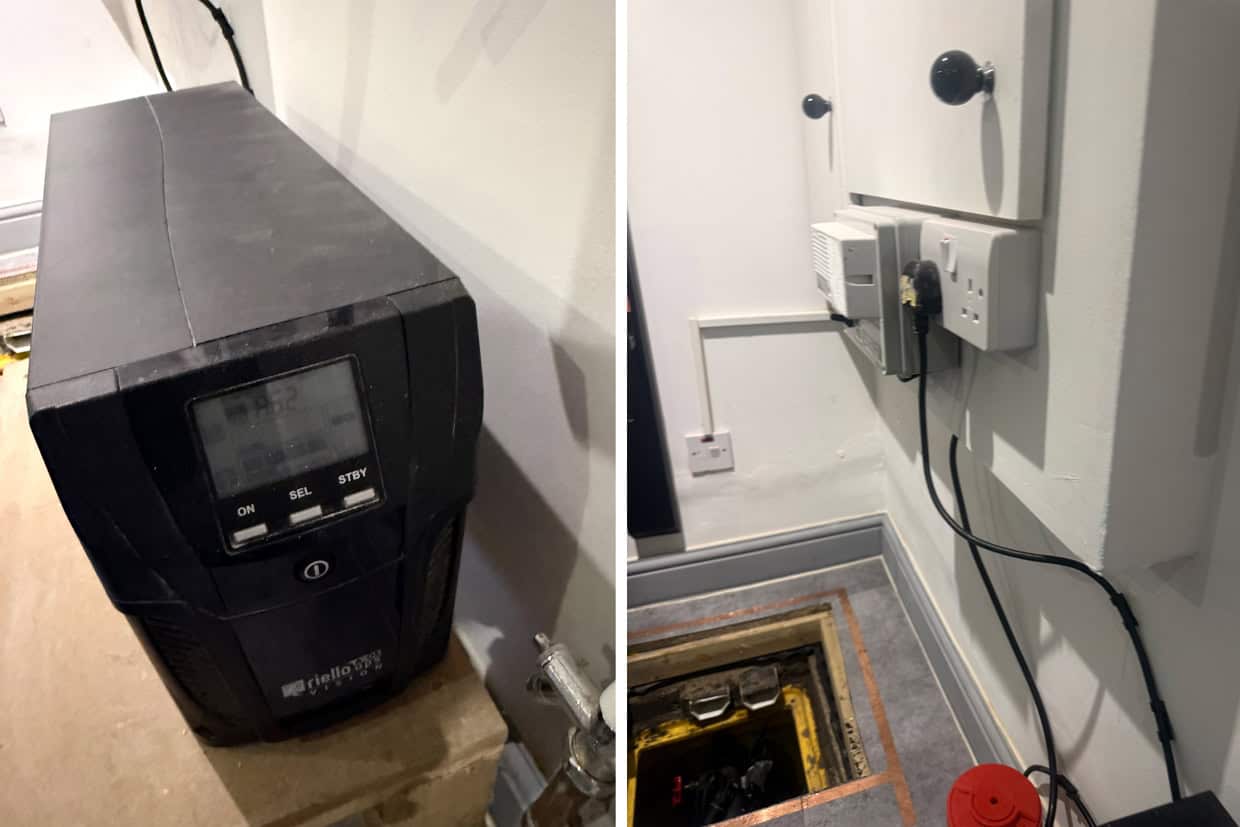
A cheap sump pump is not necessarily an adequate basement waterproofing system. A reliable Type C system needs to be designed around the property, the expected water load and the consequences of failure. This may include suitable drainage channels, an adequately sized chamber, correctly positioned pumps and controls, an alarm, backup provision and safe access for servicing.
What Concerned Us About This Installation?
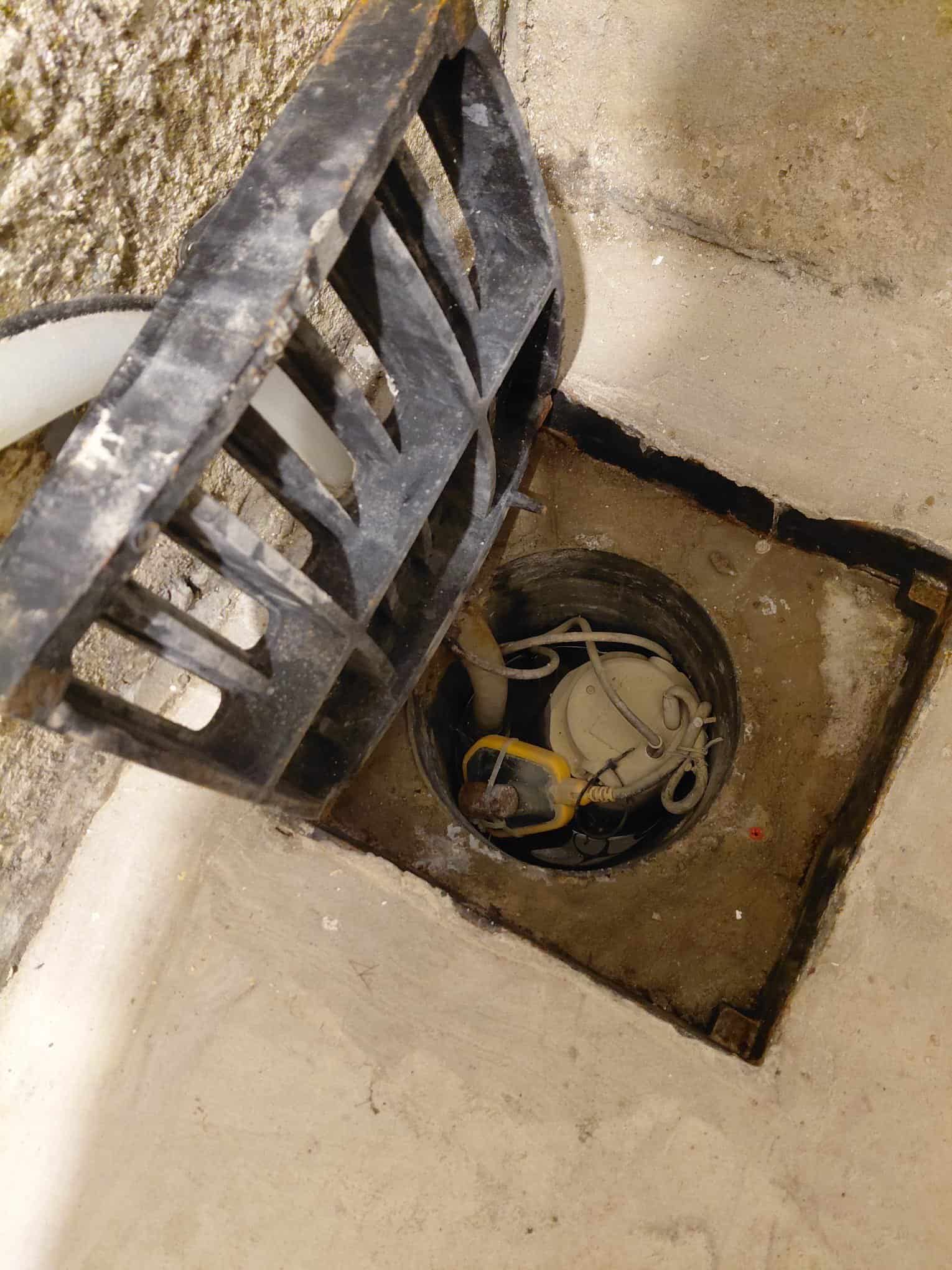
Based on what could be seen during the inspection, the main concerns included:
- Restricted movement around the float switch. A float switch needs enough room to move freely and activate the pump as the water rises. If it catches against the chamber, cabling or pump body, the pump may not start when required.
- A very small collection chamber. The chamber needs sufficient capacity for the anticipated water flow and the way the pumps will operate. An undersized chamber can lead to rapid cycling or leave little capacity during a sudden increase in water.
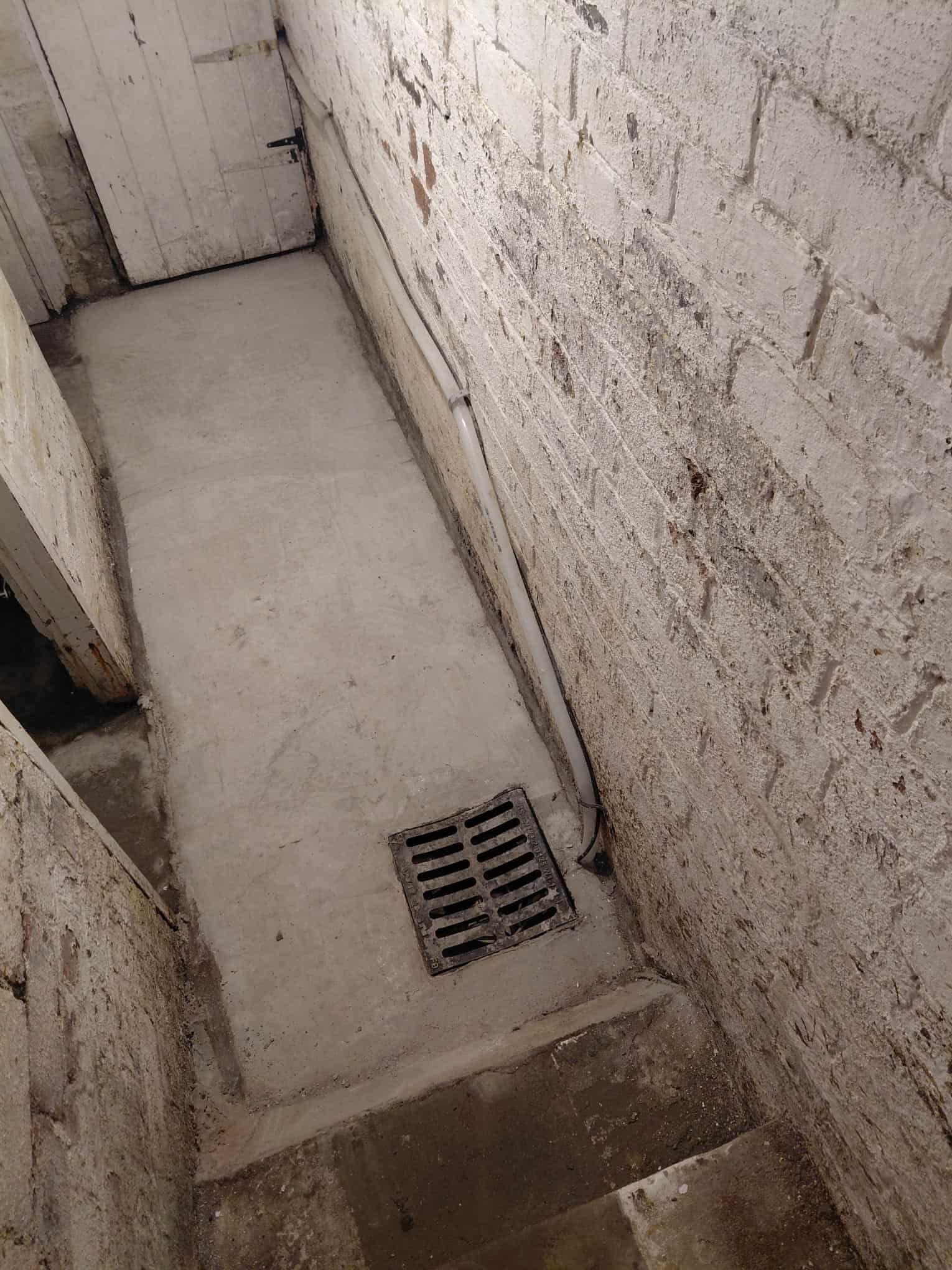
- No obvious perimeter drainage channel. In a Type C system, water is normally collected and directed through drainage channels towards the sump. A pump cannot manage water effectively if the wider system has not been designed to bring that water to it.
- Poorly fitting access cover. The chamber should remain accessible for inspection and maintenance, while also limiting the entry of debris that could interfere with the pump or controls.
- No visible backup or high-water alarm. If a single pump fails because of a fault, obstruction or loss of power, there should be a plan for managing the risk. The appropriate level of backup depends on the property and the consequences of flooding.
A complete survey and review of the original design would be needed before making a formal judgement about compliance. However, these visible issues were enough to question whether the installation could be relied upon.
How Does a Type C Waterproofing System Work?
A sump and pump can form part of a Type C drained protection system. Rather than relying solely on stopping water at the structure, this approach manages water by allowing it to enter a controlled drainage space behind a cavity drain membrane.
The water is then directed through channels to a sump chamber before being pumped to a suitable discharge point.
For the system to work properly, its parts need to operate together:
- The cavity drain membrane creates a controlled drainage space.
- Perimeter channels collect and direct the water.
- Inspection points allow the channels to be cleaned and maintained.
- The sump chamber receives and temporarily holds the water.
- The pump or pumps remove the water at the required rate.
- Alarms and backup measures help manage the consequences of a fault or power cut.
Simply placing a pump in a hole does not provide the same level of protection.
What Does an Adequate Sump Pump System Include?
There is no single specification that is right for every basement or cellar. A competent waterproofing designer should consider the property, ground conditions, intended use of the space, likely water ingress and what would happen if the pump stopped working.
Depending on that assessment, an adequate system may include:
- A suitable cavity drain membrane and drainage channels
- Accessible inspection and maintenance points
- A correctly sized sump chamber
- One or more pumps selected for the expected flow and discharge head
- Unobstructed float switches or appropriate level controls
- Non-return valves to reduce the risk of water flowing back into the chamber
- A high-water alarm
- A second pump, battery backup or other resilience measures where failure would have serious consequences
- A secure, accessible chamber cover
- Commissioning information and a planned maintenance schedule
BS 8102:2022 provides guidance for protecting below-ground structures against water ingress and recognises Type C drained protection as one of the available approaches. It also places importance on waterproofing design, maintainability and planning for defects or system failure.
Why Can Twin Pumps and Backup Power Matter?
Mechanical pumps can fail. Mains electricity can also be interrupted during severe weather, which may be the same time that the system is dealing with a higher water load.
A twin-pump arrangement can add resilience. For example, a second pump may operate if the duty pump cannot keep pace or may provide backup if the first pump develops a fault. A battery-powered backup system can offer further protection during a power cut, while a high-water alarm warns the homeowner that the water has risen above its normal operating level.
These measures should not be treated as a substitute for correct design. The pumps still need to be appropriately selected, installed, tested and maintained.
Why Does the Cheapest Quotation Sometimes Cost More?
It is completely understandable for a homeowner to compare prices. Basement waterproofing can represent a significant investment. The difficulty is that two quotations may describe very different levels of protection even if both mention a “sump pump”.
A cheaper installation may omit important parts of the system or make little allowance for a pump fault, power cut or future maintenance. If the system then fails, the homeowner may face:
- Damage to flooring, finishes and stored belongings
- Damp and mould problems following water ingress
- The cost of removing and replacing an inadequate installation
- Disruption while remedial waterproofing is carried out
- The stress of discovering the problem only after the cellar has flooded
The better question is therefore not simply, “Which quotation is cheapest?” It is, “Is the proposed system adequate for this property and the way the space will be used?”
Questions to Ask Before Accepting a Sump Pump Quotation
Before choosing a contractor or system, ask:
- Has the property been properly surveyed?
- How will water be collected and directed to the sump?
- How has the chamber and pump capacity been calculated?
- What happens if the main pump fails?
- What happens during a power cut?
- Is a high-water alarm included?
- How will the drainage channels and chamber be accessed for maintenance?
- What servicing is recommended?
- Who has designed the waterproofing system, and what relevant qualifications do they hold?
- What information, warranties and maintenance instructions will be provided on completion?
Clear answers make it much easier to compare the protection being offered, rather than comparing headline prices alone.
Does a Sump Pump Need Regular Maintenance?
Yes. A Type C waterproofing system remains dependent on clear drainage routes and working mechanical components. Pumps, float switches, alarms, backup batteries, valves and channels should therefore be checked and maintained in line with the system designer’s and manufacturer’s instructions.
The maintenance frequency should reflect the system, the site conditions and the consequences of failure. Homeowners should receive clear operating and maintenance information when the work is completed.
Final Thoughts
If you have a cellar or basement that is taking on water, or you are unsure whether an existing pump system provides adequate protection, arrange a professional assessment before the problem becomes a flood.
All Dry Damp Proofing has more than 25 years’ experience investigating damp and waterproofing problems across Yorkshire. Our team can assess the property, identify how water is entering and recommend an appropriate solution rather than relying on a one-size-fits-all pump.
Learn more about our basement conversion and waterproofing services or contact All Dry Damp Proofing to arrange expert advice. You can also call us on 01226 287181 or email info@alldrydampproofing.com.