




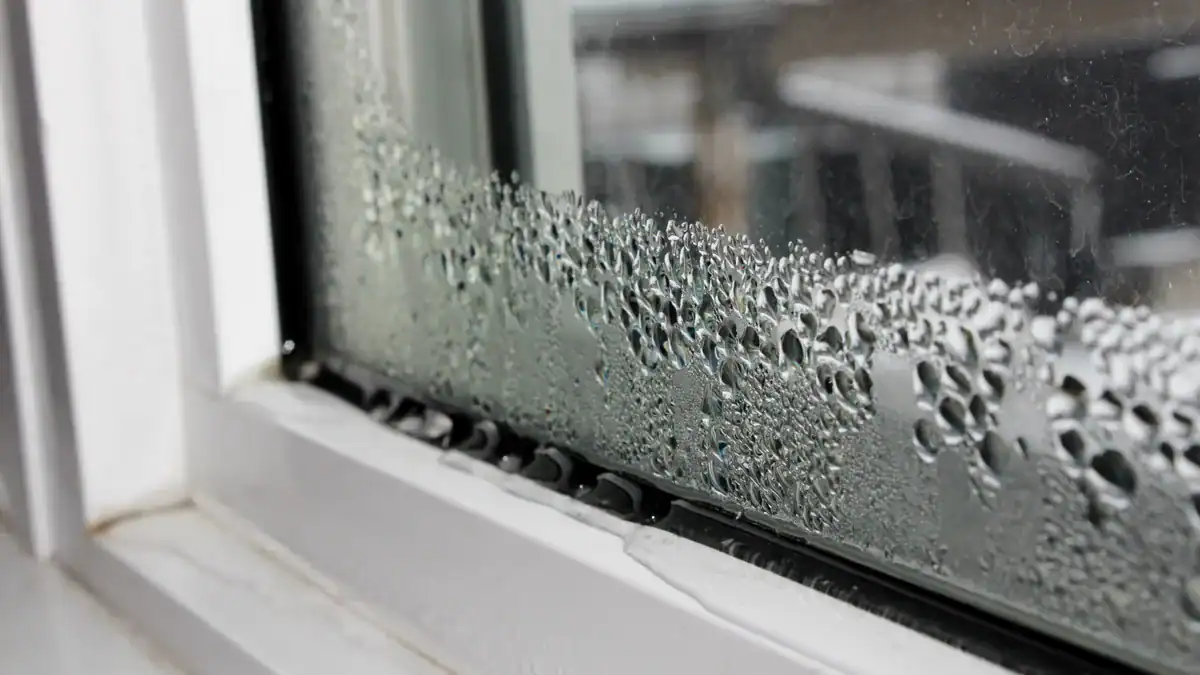


New windows and insulation should make a home warmer, more comfortable and more energy efficient. However, some homeowners notice condensation, mould or damp patches appearing after the work has been completed.
This does not necessarily mean that the new windows or insulation have directly caused damp. The improvements may have changed how heat, air and moisture move through the property, revealing an existing ventilation problem or creating cold areas where condensation can form.
Quick Answer
Damp can appear after new windows or insulation because the improvements change how heat, air and moisture move through the property. More airtight windows, blocked ventilation, insulation gaps and cold bridges can increase condensation or reveal an existing moisture problem. The cause should be identified before any damp treatment is recommended.
Why can condensation appear after new windows?
Older windows often allow air to leak through gaps around the frames. This makes the property draughty and allows heat to escape, but it also provides a route through which some moist indoor air can leave the building.
Modern replacement windows are normally much more airtight. Once the uncontrolled draughts have been removed, moisture from cooking, showering, drying clothes and normal household activity may remain inside for longer.
If there is not enough background ventilation or effective extraction, the relative humidity inside the property can rise. When warm, moist air reaches cold glass, window reveals or external walls, the moisture can condense on the surface.
The windows have not necessarily produced the moisture. They may simply have removed one of the routes through which it previously escaped.
Do new windows always need trickle vents?
Modern homes need a controlled way of replacing moist indoor air with fresher air from outside. Depending on the property and installation, this may be provided by trickle vents, extractor fans or another planned ventilation system.
Closing or blocking trickle vents can make condensation worse. Extractor fans also need to be correctly installed, working effectively and vented outside rather than into a loft or another enclosed space.
Opening windows can provide additional ventilation, but relying on occupants to keep windows open throughout winter is not always a practical long-term solution.
The right approach depends on the size, layout and occupancy of the property, as well as the ventilation already in place.
Could damp around a new window be caused by poor installation?
Not every damp patch around a replacement window is condensation. Problems with sealing, flashing or the condition of the surrounding masonry can allow rainwater to enter around the frame.
Condensation is often most noticeable on the room-facing surface of the glass or around cold window reveals. It may become worse during cold weather or after cooking and showering.
Penetrating damp may produce a more localised stain around the frame and could become worse during or after rainfall. Cracked render, damaged pointing and gaps around the installation should also be considered.
The pattern, timing and position of the moisture can provide useful clues, but an inspection may be needed to confirm whether the problem is condensation or water ingress.
Why can damp appear after insulation is installed?
Correctly installed insulation can increase internal surface temperatures and reduce the risk of condensation. However, the building needs to be considered as a complete system.
Insulation changes how heat flows through walls, floors and roofs. If sections are missed or poorly detailed, some surfaces may remain much colder than the areas around them.
These colder sections are known as thermal bridges. Moisture is more likely to condense on them, which can lead to isolated mould growth around corners, ceiling edges, lintels and window openings.
Problems can also occur if insulation blocks existing ventilation or if an underlying leak is concealed rather than repaired before the work begins.
Can loft insulation cause condensation?
Loft insulation should not cause condensation when it is correctly installed and the roof space has suitable ventilation.
However, insulation can sometimes be pushed too tightly into the eaves and block the airflow entering the roof space. Warm, moist air may also escape from the rooms below through gaps around the loft hatch, pipework or other openings.
If a bathroom extractor fan discharges into the loft instead of outside, it can introduce a considerable amount of moisture. This moisture may then condense on cold roofing materials and timbers.
Signs of a loft moisture problem include damp insulation, water droplets beneath the roof covering, staining and fungal growth on the timbers. Persistent moisture in a roof space should be investigated before it contributes to more serious timber decay.
Can cavity wall insulation lead to damp?
Cavity wall insulation can provide an effective energy-efficiency improvement when the property is suitable and the work is correctly specified and installed.
Before installation, defects such as cracked render, damaged pointing, leaking gutters and existing water penetration should be addressed. Insulation cannot correct an external building defect that is already allowing moisture to enter.
Properties in exposed locations also need careful consideration because wind-driven rain places greater pressure on external walls.
If damp appears after cavity wall insulation, the investigation should consider the condition of the external wall, the suitability and coverage of the insulation, internal ventilation and any existing moisture problems. The timing alone does not prove that the insulation is responsible.
Why can black mould appear after energy-efficiency work?
Black mould needs moisture to grow. It is commonly found around windows, on cold external walls, behind furniture and in corners where there is limited air movement.
Making a property more airtight can allow indoor humidity to rise if ventilation is not improved at the same time. Mould may then appear on the coldest surfaces in the room.
Cleaning the visible mould may temporarily improve its appearance, but it will often return if the humidity, cold surface or ventilation problem remains. Our guide explains more about why black mould keeps coming back.
How can the problem be resolved?
The correct solution depends on the cause. There is no single damp-proofing product that will fix every problem appearing after new windows or insulation.
The property may need improvements to background ventilation, better extraction in bathrooms and kitchens, repairs around a window frame or correction of gaps in the insulation. External defects, blocked air vents and roof-space ventilation should also be checked.
A dehumidifier may help lower indoor moisture temporarily, but it should not be treated as a substitute for identifying why humidity is building up.
All Dry provides professional condensation control solutions based on the way each property is constructed, heated, ventilated and occupied.
When should you arrange a condensation survey?
Professional advice is recommended when condensation is persistent, mould repeatedly returns or the cause of a damp patch is unclear.
A survey is particularly useful if the problem appeared after home improvements but you cannot determine whether it is related to ventilation, insulation, water ingress or an installation defect.
During a professional condensation survey, the property’s ventilation, humidity, internal temperatures, cold surfaces and possible moisture sources can be assessed. This provides a much stronger basis for deciding what work is actually required.
Damp and condensation advice across Yorkshire
All Dry Damp Proofing helps homeowners, landlords and businesses resolve damp, mould and condensation problems throughout Yorkshire, including Barnsley, Sheffield, Rotherham, Doncaster and Huddersfield.
Our CSRT and CSSW-qualified surveyors identify the cause before recommending work. This helps avoid unnecessary treatments and ensures the proposed solution is appropriate for the property.
If damp or mould has appeared after new windows or insulation were installed, contact All Dry Damp Proofing or call 01226 287181 for professional advice.