






Quick Answer
Damp proofing treatment on an average room takes one to three days, including injecting a new damp proof course and applying salt-retardant replastering. The wall then needs time to dry. As a rule of thumb, masonry dries at roughly 25mm per month, so a nine-inch solid wall can take several months to dry fully. New plaster can usually take a breathable mist coat and emulsion after two to four weeks, but wallpaper, vinyl paints and other non-breathable finishes should be left for at least six months, and ideally twelve.
How Long The Treatment Itself Takes
For most domestic jobs the physical work is faster than people expect.
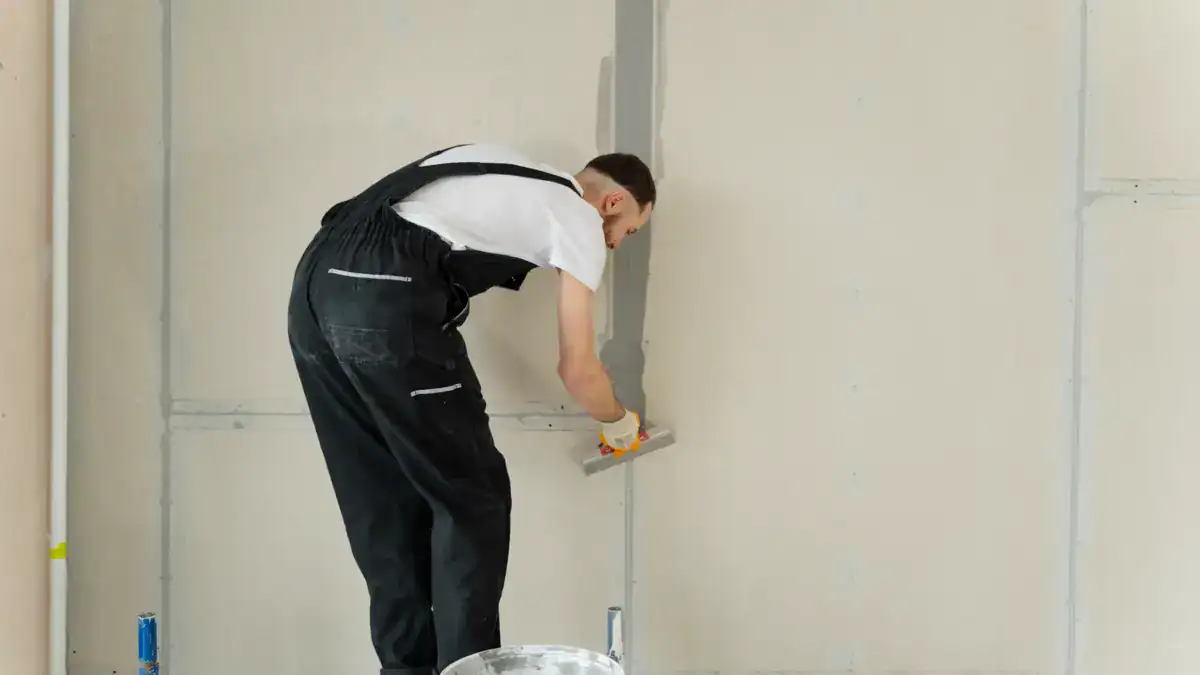
Injecting a chemical damp proof course into a single room is typically half a day to a day, depending on wall thickness, access and whether skirtings, plaster and floor coverings need removing first. Replastering the treated walls usually adds another day. For an average room in a terraced or semi-detached house, one to three days on site covers the whole job.
Larger or more complicated work takes longer. Cellar tanking, cavity drainage membrane systems and basement conversions run to a week or more. Where wet or dry rot is involved, timber removal and replacement adds time, and the affected area is often larger than it first appears.
Your surveyor will give you a realistic timescale in the written report rather than a generic estimate, because it depends on the property.
Why Replastering Is Not Optional
It is worth understanding what the replastering is actually for, because it explains most of the waiting that follows.
Rising damp carries hygroscopic salts up through the wall from the ground. Those salts stay in the plaster long after the moisture has gone, and because they attract moisture from the air, they will continue to produce damp patches and spoil decoration even when the damp proof course is working perfectly.
Removing the contaminated plaster and applying a salt-retardant render is the second half of the treatment, not an optional extra. A new damp proof course without replastering will usually look like a failed treatment within months.
How Long Walls Take To Dry
This is where the real timescale sits, and it is the part most people underestimate.
The widely used guideline is that masonry dries at approximately 25mm per month under reasonable conditions. On that basis:
- A 112mm single-skin wall may take four to five months
- A 225mm nine-inch solid wall can take nine months or more
- Thicker stone walls, common across Yorkshire, can take longer still
That figure assumes normal heating and ventilation. A cold, closed-up room dries far more slowly. Treatment carried out in November will take longer to dry out than the same work done in May.
None of this prevents you using the room. It affects what you put on the wall and when.
When You Can Paint
New plaster normally needs two to four weeks before it can take paint, though this depends on thickness, room temperature and ventilation.
The first coat should be a breathable mist coat, which is emulsion thinned with water, followed by breathable emulsion. This allows moisture to continue passing out of the wall while the plaster dries behind the paint. Plaster that has dried evenly to a consistent pale colour with no darker patches is generally ready.
If you paint too early, or seal the surface with the wrong product, you trap moisture behind the finish. That is what causes bubbling, flaking and patchy discolouration a few weeks later, and it is a repair rather than something that settles down on its own.
When You Can Wallpaper Or Use Vinyl Paint
This is where patience genuinely pays. Non-breathable finishes should wait at least six months, and twelve is safer on thick solid walls.
That includes:
- Wallpaper of any kind, including lining paper
- Vinyl and vinyl silk emulsions
- Oil-based and gloss paints on wall surfaces
- Tiling
- Panelling or cladding fixed directly to the treated wall
All of these form a barrier. Applied to a wall that is still drying, they hold moisture against the plaster and the problem reappears, often at the top of the treated area where the drying front has reached.
It is frustrating when you want the room finished, but six months of breathable emulsion is a great deal cheaper than stripping and replastering a second time.
What Slows Drying Down
Several things extend the timescale, and most of them are within your control:
- Poor ventilation. Closed windows and no airflow leave moisture with nowhere to go.
- Low temperature. An unheated room dries very slowly. Gentle background heat is more effective than short bursts of high heat.
- Furniture against the wall. Anything pushed against a drying wall restricts airflow across the surface.
- Early sealing. Applying any non-breathable coating restarts the problem.
- Winter timing. Work carried out in cold months simply takes longer to dry.
Steady heat, open airflow and space in front of the wall will shorten the wait more than anything else.
What To Expect While The Wall Dries
Some things during the drying period look alarming but are normal.
You may see patchy dark areas that move or shrink over weeks, a faint white salt bloom on the surface, or a slight musty smell as moisture leaves the wall. Salt deposits can be brushed off dry rather than washed, since washing puts moisture back in.
What is not normal is a damp patch that grows, returns to the same place repeatedly after drying, or appears above the treated height. If you see any of those, contact us rather than waiting. All our work is guaranteed, with the option of a GPI insurance-backed guarantee, and we would far rather look at something early.
Damp Proofing FAQ’s
Can I live in the house during damp proofing?
Yes, in almost all cases. The work is dusty and noisy while it is happening, and the treated room will be out of use for a day or two, but there is rarely any need to move out. We will tell you at survey stage if your particular job is an exception.
How soon after damp proofing can I put furniture back?
Furniture can go back into the room once the plaster is dry to the touch, but keep it away from the treated walls until the drying period is over. Leaving a gap of a few inches maintains airflow across the surface and helps the wall dry evenly.
Why is my new plaster still damp weeks later?
That is usually the wall drying rather than a problem with the treatment. Moisture within the masonry passes out through the new plaster over several months. It becomes a concern only if the damp patch is growing or keeps returning to the same spot after drying.
Do I need a survey before any work starts?
Yes. Rising damp, penetrating damp and condensation look similar on a wall and need completely different treatments. Our CSRT qualified surveyors carry out a full inspection and provide a written report, so you are not paying for treatment you do not need. You can read more about our damp surveys.
What if the damp is actually condensation?
Then injecting a damp proof course will not fix it, and any reputable company should tell you so. Condensation is treated through ventilation, insulation and heating rather than chemical treatment. Our condensation control service covers this properly.
Is the work guaranteed?
Yes. All our work is guaranteed, and a GPI insurance-backed guarantee is available for additional peace of mind. We are PCA and TrustMark accredited, and all workmanship complies with BS 6576 and BS 8102.
Final Thoughts
The treatment is the short part. Damp proofing an average room takes one to three days, and you will have your room back almost immediately.
The wall behind the plaster is the part that needs patience. Breathable emulsion after a few weeks, nothing sealed for six to twelve months, and steady heat and ventilation throughout. Follow that and the work lasts. Rush it and you will be paying for the same room twice.
To arrange a survey, call us on 01226 287181 or get a fast quote online. You can also see examples of completed work across Yorkshire in our recent projects.