






Quick Answer
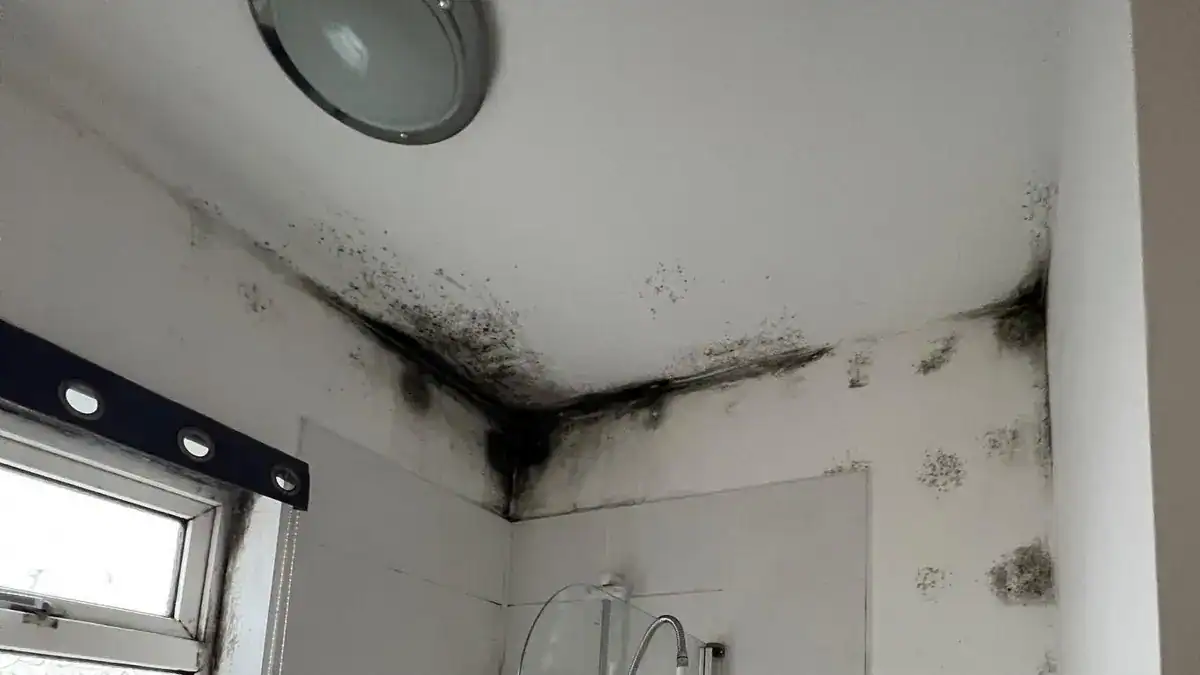
Black mould returns every autumn because it is caused by condensation rather than by a defect in the wall. When the heating goes on and the windows stay shut, warm moist air meets cold surfaces and condenses on them. Mould grows wherever a surface stays damp for long enough, which is why it reappears in the same cold spots each year. Wiping it off treats the symptom. Stopping it means addressing ventilation, insulation and heating together.
Why Autumn Is Always The Trigger
Three things change at once in October and November, and all three push in the same direction.
Outside temperatures fall, which cools external walls from the outside. The heating goes on, which raises the moisture-holding capacity of the air indoors. And windows and doors stay shut, which stops that moisture escaping. Warm air holds far more water vapour than cold air, so the same everyday activities that caused no problem in July suddenly produce visible condensation.
The moisture itself has not increased. A typical household generates a similar amount year round through cooking, washing, showering and drying clothes. What changes is where that moisture ends up, and it ends up on the coldest surfaces in the house.
Why It Comes Back In The Same Places
Mould does not appear at random. It follows cold spots, and cold spots do not move.
The usual locations are the corners of external walls, window reveals and behind the frames, the wall behind furniture pushed against an external wall, north-facing rooms that get little sun, unheated bedrooms and box rooms, and the ceiling line where a wall meets an uninsulated loft.
These are all places where the internal surface temperature drops below the dew point of the air in the room. Once condensation forms and stays for long enough, mould has everything it needs. Because the cold bridge causing it is a permanent feature of the building, the same spot performs the same way every winter.
This is also why cleaning off the mould achieves so little. You have removed the growth but changed nothing about the conditions that produced it.
Condensation Or Damp? They Look The Same
This distinction matters more than any other, because the treatments have nothing in common.
Rising damp is generally confined to the lower part of a wall, typically no higher than a metre, and often comes with a visible tide mark and salt deposits. Penetrating damp shows as a localised patch that worsens after heavy rain, usually traceable to a defect outside such as cracked pointing, a failed gutter or damaged render. Condensation appears higher up, in corners and around windows, on cold surfaces rather than at floor level, and is worst in winter.
Black mould specifically is a condensation problem in the overwhelming majority of cases. Injecting a damp proof course into a wall with a condensation problem will cost money and change nothing. Our damp surveys exist to establish which of the three you are actually dealing with before anyone recommends treatment.
Why Modern Improvements Made It Worse
There is an uncomfortable irony in a lot of the properties we survey. The mould appeared after the house was improved.
Older Yorkshire housing stock was draughty, and those draughts were doing a job. Air moved through the building continuously, carrying moisture out with it. Replacement double glazing, cavity wall insulation, loft insulation and blocked-off chimneys have all made these homes far more airtight and far cheaper to heat.
The moisture that used to escape now has nowhere to go. It sits in the air until it finds the coldest surface available, and in a house where most walls are now insulated, the few remaining cold bridges take the whole load. That is why mould often concentrates in one or two spots rather than spreading evenly.
What Actually Stops It
Lasting improvement comes from addressing three things together. Doing one in isolation rarely works.
Ventilation. Moisture needs a route out of the building. That may mean extractor fans in the kitchen and bathroom that actually run long enough to clear the air, trickle vents left open, or a positive input ventilation system that continuously introduces filtered air and displaces the damp air. PIV is often the single most effective intervention in a house with a persistent whole-property problem.
Insulation. If a surface stays warmer, condensation cannot form on it. Targeted insulation at cold bridges, thermal boarding on the worst wall, or improving loft insulation above an affected ceiling all raise the surface temperature above the dew point.
Heating. Steady background warmth works far better than short bursts. A room heated briefly to a high temperature and then allowed to go cold produces more condensation than one kept at a consistent moderate temperature, because the air holds moisture while warm and dumps it as the room cools.
Our condensation control service covers all three, based on what the survey finds rather than a standard package.
What You Can Do Straight Away
Some changes cost nothing and make a measurable difference:
- Pull furniture a few inches away from external walls to let air move across the surface
- Close internal doors when cooking or showering, and run the extractor for fifteen minutes afterwards
- Dry washing outdoors where possible, or in one room with the door shut and a window open
- Avoid drying clothes on radiators, which puts several litres of water into the air over a winter
- Open trickle vents and leave them open
- Keep unused rooms gently heated rather than cold and closed
These will not resolve a serious cold bridge on their own, but they reduce the moisture load and often make the difference in a borderline room.
Cleaning Mould Safely
If you are removing existing growth, do it properly. Dry brushing releases spores into the air, and bleach kills surface growth without addressing what lies beneath.
Use a proprietary fungicidal wash rather than bleach, wipe rather than scrub, ventilate the room while you work, and wear gloves and a mask. Dispose of cloths rather than reusing them.
Then treat it as information rather than a job done. Mould returning to the same spot each year is telling you something specific about that part of the building.
Black Mould FAQ’s
Is black mould dangerous?
It should not be ignored. Mould spores can aggravate asthma, allergies and other respiratory conditions, and the effect is greater on children, older people and anyone with an existing lung condition. Persistent growth in a bedroom is worth acting on rather than living with.
Why does it keep coming back after I clean it?
Because cleaning removes the growth but not the cause. The wall in that spot is still colder than the dew point of the air in the room, so the surface still becomes damp and the mould regrows. Until the surface temperature or the moisture level changes, the cycle repeats each winter.
Will a dehumidifier fix it?
It will help in one room by lowering the moisture in the air, and it is a reasonable short-term measure. It does not address the cold surface causing the condensation, and it needs emptying and running continuously. It manages the problem rather than resolving it.
Is it my fault for not ventilating enough?
Usually not. Household moisture levels are fairly normal in most properties we survey. The problem is more often that the building has been made airtight without adequate ventilation being added back, combined with a cold bridge that concentrates the condensation in one place.
Do I need a damp proof course?
Not for condensation, and any company recommending one without a proper survey is worth questioning. Rising damp and condensation look similar on a wall and require entirely different treatments. Our CSRT qualified surveyors identify the cause before any work is proposed.
How quickly can you inspect a property?
We aim to inspect most properties within a few days of enquiry, with a written report provided promptly. We cover Barnsley, Sheffield, Rotherham, Doncaster, Huddersfield and the whole of Yorkshire.
Final Thoughts
Black mould returning every autumn is a pattern, not bad luck, and patterns can be broken. The building has a cold spot, the air has moisture in it, and the season brings the two together.
Wiping it off each October will keep you busy indefinitely. Establishing which surface is cold and why, then dealing with ventilation, insulation and heating together, is what stops it coming back.
To arrange a survey, call us on 01226 287181 or get a fast quote online. You can see examples of completed work across Yorkshire in our recent projects.