




Damp Proofing Wakefield
CSRT & CSSW qualified surveyors · PCA approved · TrustMark registered
Rising damp, penetrating damp, condensation and timber decay treated across Wakefield, from the stone terraces of Alverthorpe and Thornes to the colliery housing at Stanley, Outwood and Crofton. We diagnose the cause before we quote for the cure.
Why damp is so common in Wakefield homes
Wakefield sits on the magnesian limestone belt with the Calder running through it, and both the geology and the river shape the damp problems we see here.
Porous limestone and solid walls
A good deal of older Wakefield property is built from local magnesian limestone and gritstone with solid walls and no cavity. Limestone is noticeably porous, and once pointing softens or a gutter overflows the wall absorbs water rather than shedding it. Repointing in modern cement rather than lime makes this worse, because it traps moisture in the stone instead of letting it breathe out.
The Calder and low-lying ground
Properties near the river at Thornes, Horbury Bridge, Stanley Ferry and Calder Grove sit on ground that holds water. Where a home has taken flood water, salts drawn into the plaster keep attracting moisture from the air for years afterwards, which is why damp often returns to a property that was replastered without the contaminated coats being stripped back first.

Colliery housing, cellars and winter condensation
Two further issues come up on Wakefield surveys repeatedly, and neither is solved by injecting a damp proof course.
Former mining ground
Stanley, Outwood, Crofton, Sharlston and Normanton grew around collieries, and historic ground movement has left cracked pointing and render across a lot of that housing. A hairline crack on a weather-facing elevation is enough to let driving rain through a solid wall, so we always inspect the outside of a property before considering any injected treatment.
Airtight homes and black mould
Cavity and loft insulation, replacement glazing and blocked chimneys have made Wakefield homes far more airtight. Moisture that used to escape now sits in the air, and each winter it condenses on the coldest surfaces, showing as black mould in corners, on window reveals and behind furniture placed against external walls.
The three types of damp we treat in Wakefield
They look similar on the wall and they are treated completely differently. Getting this wrong is the single most expensive mistake a property owner can make, which is why every job starts with a survey rather than a quote.
Moisture drawn up from the ground
Tide marks up to about a metre, salt bloom in the plaster, damp skirtings and lifting floor coverings. In Wakefield it is usually a failed slate DPC in a Victorian stone terrace, or a DPC bridged by a raised path, drive or garden. Treated with a chemical DPC and salt-resistant re-plastering.
Water coming through the structure
Appears at any height and worsens after heavy rain. Common causes here are softened pointing on porous limestone, cement repointing trapping moisture, and cracked render on former colliery housing. Treated by fixing the defect first, then making good internally.
Moisture the building cannot shift
Black spotting in corners, on window reveals and behind furniture, worst between October and March. Widespread in the district's insulated interwar and post-war housing where ventilation has been sealed up over the years. Resolved with improved ventilation alongside targeted mould treatment.
What happens when we survey your Wakefield property
Every job begins with a damp survey carried out by a CSRT qualified surveyor. You get a written report and a clear recommendation, including the times we tell you no damp proofing work is needed.
Inspection
External ground levels, pointing, rainwater goods and DPC line, then a full internal inspection including the cellar.
Testing
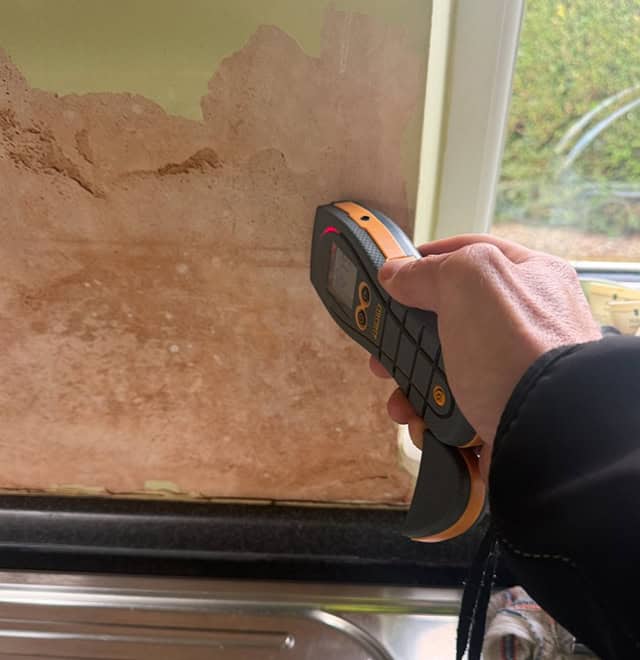
Moisture meter readings, salt analysis where rising damp is suspected, and timber probing for rot and woodworm.
Report
A written report setting out the cause, the evidence behind the diagnosis and the recommended remedial work.
Quotation
An itemised, fixed-price quotation. No pressure, no obligation, and no work booked until you are ready.

Damp proofing treatments for Wakefield properties
We are registered Safeguard and Sovereign users, and all remedial work is carried out to PCA standards using methods appropriate to the construction of the building.
- Chemical damp proof course injection for failed or missing DPCs in stone and brick walls
- Salt-retardant re-plastering, the essential second half of any rising damp treatment
- Cellar tanking and cavity drainage membranes for below-ground rooms and basement conversions
- External pointing and render repairs to stop penetrating damp at source
- Ventilation and PIV systems as part of our approach to condensation control
- Timber treatment for wet rot, dry rot and woodworm in joists and floor timbers
What our customers say
Verified reviews from homeowners, landlords and letting agents across Wakefield and West Yorkshire.

Qualified surveyors covering Wakefield
All Dry is based in Barnsley, a short run up the A61 and M1 from Wakefield, and we have been treating damp across Yorkshire for more than 25 years. That means a surveyor who understands how local limestone behaves, and a team you can still get hold of years after the work is finished.
- CSRT qualified surveyors
- CSSW qualified for structural waterproofing
- PCA approved contractor
- TrustMark registered
- Registered Safeguard and Sovereign users
- Guarantee Protection Insurance available
- Building Regulations compliant workmanship
- Reports accepted by lenders and surveyors
Workmanship is guaranteed on every job, and Guarantee Protection Insurance is available on all completed work.
Areas of Wakefield we cover
We work across the whole of Wakefield, including the town centre and all surrounding suburbs and villages.
- Sandal
- Horbury
- Ossett
- Outwood
- Stanley
- Agbrigg
- Belle Vue
- Lupset
- Alverthorpe
- Wrenthorpe
- Crofton
- Walton
- Newmillerdam
- Durkar
- Kettlethorpe
- Normanton
- Crigglestone
- Netherton
- Thornes
- Sharlston
- Ackworth
- Ryhill
- Featherstone
- Middlestown
Covering WF1 to WF5, plus WF6, WF7 and WF9. Just outside Wakefield? We also cover Leeds, Dewsbury, Huddersfield and Barnsley. See all areas we cover.
Damp proofing in Wakefield, common questions
The questions Wakefield homeowners, landlords and buyers ask us most often.
It depends on how much wall needs treating, whether re-plastering is required and how easy the property is to access. A single wall in a terraced house is a very different job from tanking a full cellar, so we do not quote before we have seen the property. After the survey you get an itemised, fixed-price quotation, and the figure you are quoted is the figure you pay.
Yes. A proper survey takes time and produces a written report you can use, including with a mortgage lender or your own builder. The fee is refunded in full against the cost of the work if you go ahead with us. We would rather charge for an honest diagnosis than offer a free inspection that only ever concludes you need work doing.
Often it is something else. In Wakefield the most common misdiagnosis is condensation or a bridged damp proof course being treated as rising damp. Raised external ground levels, a leaking gutter or eroded pointing will all produce damp patches that look identical from the inside. That is why we test for salts and inspect the outside of the property before recommending any injection work.
It does. Magnesian limestone and gritstone are porous and need to breathe, so the wrong repair can trap moisture rather than release it. Cement repointing and impermeable paints are two of the most common causes of persistent damp in older Wakefield property. Where the building is traditionally built, lime-based repairs and breathable finishes are usually the right answer.
Regularly. Much of the housing at Stanley, Outwood, Crofton and Sharlston was built for the pits, often with solid or early cavity walls. Historic ground movement leaves cracked pointing and render, so penetrating damp is frequently the real cause where rising damp has been assumed.
A chemical DPC and re-plaster to one or two walls is typically two to four days on site. Cellar waterproofing usually takes one to two weeks. New plaster then needs to dry before decorating, so allow around one month per 25mm of thickness. Most walls are ready to paint after four to six weeks using a breathable emulsion.
Yes. Our reports are produced by CSRT qualified surveyors and we are a PCA approved contractor, which is what lenders and homebuyer surveyors look for when a retention has been placed on a purchase. If you are buying in Wakefield and your survey has flagged damp, tell us and we will prioritise the appointment.
All workmanship is guaranteed, and Guarantee Protection Insurance is available on completed work. That means the cover stands even if the company ceases trading, and the guarantee is transferable to a new owner if you sell the property.
Get your Wakefield damp problem diagnosed properly
Book a survey with a CSRT qualified surveyor and get a written report, an honest diagnosis and a fixed-price quotation.
07973 748566Start Your Online Quote